December Homeschool Themes & Holiday Learning Ideas for Elementary Students
Inside: December homeschool themes and holiday learning ideas for elementary students, including winter science, celebrations, history, and more.
December is a month filled with opportunities for seasonal learning. As the year comes to a close and winter begins to settle in across the Northern Hemisphere, children can explore everything from holiday traditions and winter science to history, geography, folklore, and seasonal literature.
This post contains affiliate links, see my disclosure policy for more information.
December Homeschool Themes & Holiday Learning Ideas for Elementary Students
It’s also a wonderful time to bring learning beyond the usual textbook or worksheet. A study of winter celebrations can introduce children to different cultures and traditions, while a simple exploration of snow, ice, and changing daylight can lead to interesting science discoveries.
Whether you’re planning December homeschool activities, looking for fresh classroom themes, or simply wanting to add some seasonal inspiration to your regular learning routine, there are plenty of topics worth exploring.
December can be a nice change to the everyday homeschool pace. When my kids were little, think early elementary, I would switch from our traditional lessons to everything holiday-related. Whether that was learning about other traditions or just adding a Christmas spin to their lessons, like reading holiday books.

Winter Solstice: The Shortest Day of the Year
The winter solstice is an excellent December science and history topic.
In the Northern Hemisphere, the winter solstice marks the shortest day and longest night of the year. It usually occurs around December 21 or 22.
For thousands of years, people have observed the changing seasons and the movement of the sun. Many ancient cultures developed traditions, celebrations, and monuments connected to the winter solstice.
Learning activities to try:
- Record sunrise and sunset times for several days.
- Compare daylight hours in different cities around the world.
- Use a globe and flashlight to demonstrate Earth’s tilt.
- Create a simple diagram showing the seasons.
- Research ancient winter solstice celebrations.
- Write a short explanation of why the winter solstice occurs.
For an additional geography connection, compare the winter solstice in the Northern Hemisphere with the summer solstice in the Southern Hemisphere.
Children often find it fascinating that while one part of the world is experiencing its shortest day, another is experiencing its longest!

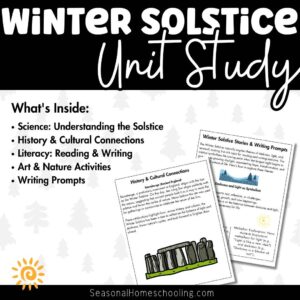
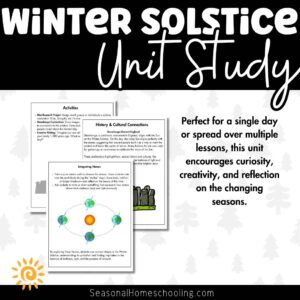
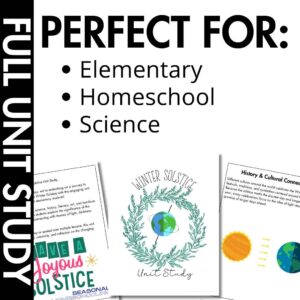


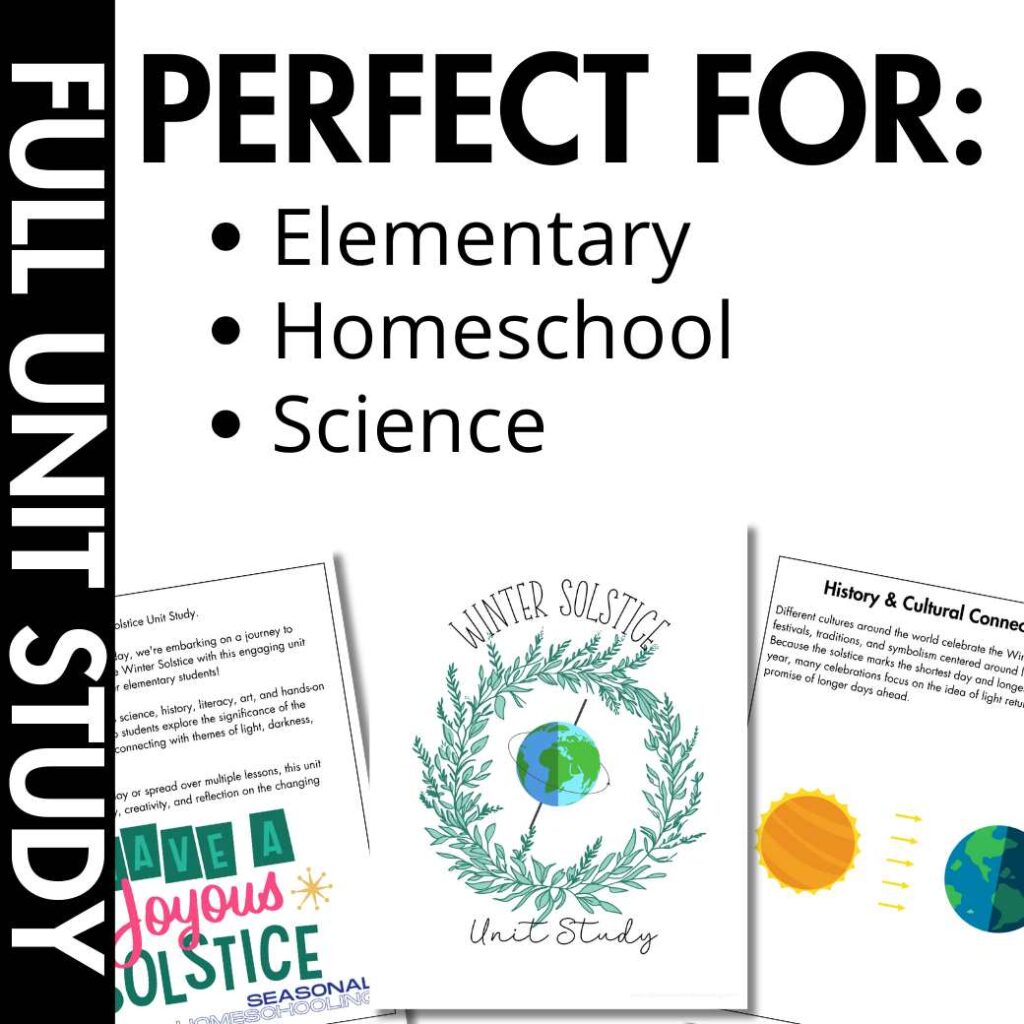
Winter Solstice Unit Study
Celebrate the magic of the Winter Solstice with this engaging unit study designed for upper elementary students! This resource combines science, history, literacy, art, and hands-on nature activities to help students explore the significance of the Winter Solstice while connecting with themes of light, darkness, and renewal.
The Science of Snow & Ice
For many children, December brings the excitement of snow and freezing temperatures. Even in places where snow is uncommon, the science behind frozen water offers plenty of opportunities for investigation.
Snow and ice are excellent subjects for elementary science because children can observe, experiment, and ask questions about what they see.
Learning activities to try:
- Investigate how ice melts under different conditions.
- Observe snowflakes using a magnifying glass.
- Create paper snowflakes and explore patterns and symmetry.
- Compare how quickly ice melts in different locations.
- Research the formation of glaciers.
- Keep a winter weather observation journal.
For older elementary students, introduce the water cycle and discuss how temperature affects precipitation. We once melted snow during our regular lessons to add something else to our homeschool day.
You can also explore the work of Wilson Bentley, the photographer who became famous for his detailed photographs of snowflakes.
His work provides a wonderful connection between science, photography, history, and art.
Christmas Around the World
Christmas is celebrated in many different ways around the world. Exploring these traditions provides an opportunity to introduce children to geography, history, literature, and cultural studies.
Some countries have traditions that may be familiar, while others have celebrations that are completely new to young learners.
Learning activities to try:
- Choose a country and research its Christmas traditions.
- Locate each country on a world map.
- Compare traditional holiday meals.
- Create a Christmas around the world fact file.
- Write a postcard from a child celebrating Christmas in another country.
- Compare winter and summer Christmas celebrations.
This is a lovely way to explore how geography, climate, history, and culture influence traditions.

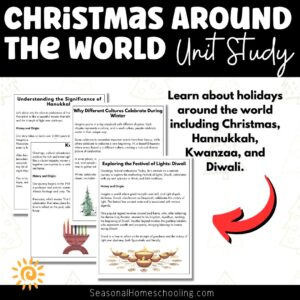
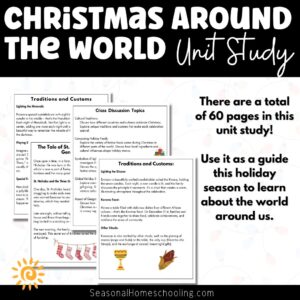
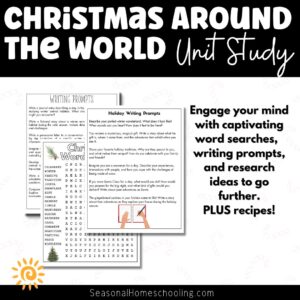


Christmas Unit Study – Winter Holidays & Global Christmas Around the World Traditions
Bring cultural exploration and festive learning to life with the Christmas Around the World Unit Study – Winter Holidays & Global Christmas Traditions! Designed for 3rd–5th grade, this engaging Social Studies and Language Arts resource introduces students to Christmas, Hanukkah, Kwanzaa, Diwali, and other global winter celebrations through hands-on, low-prep lessons. Perfect for whole-group instruction, centers, morning work, or sub plans, this Christmas unit study helps students connect meaningfully with traditions around the world while building reading, writing, and critical thinking skills.
Arctic Animals & Polar Regions
December is a natural time to explore the Arctic and Antarctica, particularly when children are surrounded by winter-themed books, activities, and decorations.
These regions offer fascinating opportunities to study extreme environments, animal adaptations, geography, and climate.
Learning activities to try:
- Compare the Arctic and Antarctica using a Venn diagram.
- Research a polar animal and create an adaptation fact sheet.
- Locate the Arctic Circle and Antarctic Circle on a globe.
- Explore how blubber helps certain animals stay warm.
- Create a polar food web.
- Investigate how daylight changes in polar regions.
One important distinction to explore is that polar bears live in the Arctic, while penguins naturally live in the Southern Hemisphere. They do not share the same natural habitat!
This is a fun opportunity to correct a common misconception while introducing geography and animal science.

The History of Winter Celebrations
Long before modern holiday traditions developed, people marked the changing seasons with festivals and celebrations.
For many ancient communities, winter was a significant time of year. Shorter days, colder weather, and limited food supplies made the arrival of winter an important event.
Learning activities to try:
- Create a timeline of winter celebrations throughout history.
- Compare ancient and modern winter traditions.
- Research the origins of a familiar holiday custom.
- Write a historical diary entry from the perspective of a child attending an ancient winter festival.
- Explore how different civilizations adapted to winter weather.
This theme is especially useful for children who enjoy history and discovering where familiar traditions originated.
New Year’s Traditions Around the World
Although New Year’s Eve falls at the end of December, it’s a wonderful topic to introduce before the holiday break.
Different cultures welcome the new year with unique traditions, celebrations, foods, and customs.
Learning activities to try:
- Research New Year’s traditions in different countries.
- Create a world map showing New Year celebrations.
- Compare how different cultures welcome the new year.
- Write about a tradition you’d like to experience.
- Create a time-zone chart showing when different parts of the world celebrate midnight.
- Write a letter to your future self.
This theme provides a natural opportunity to introduce goal-setting, reflection, geography, and cultural studies.

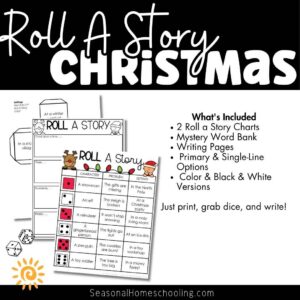
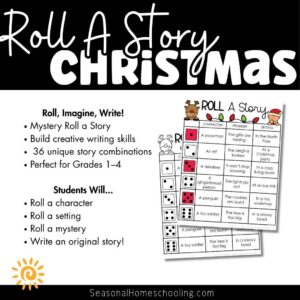
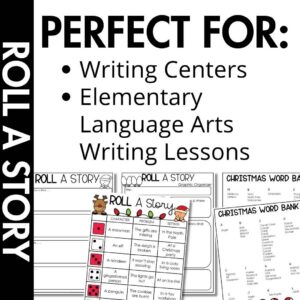


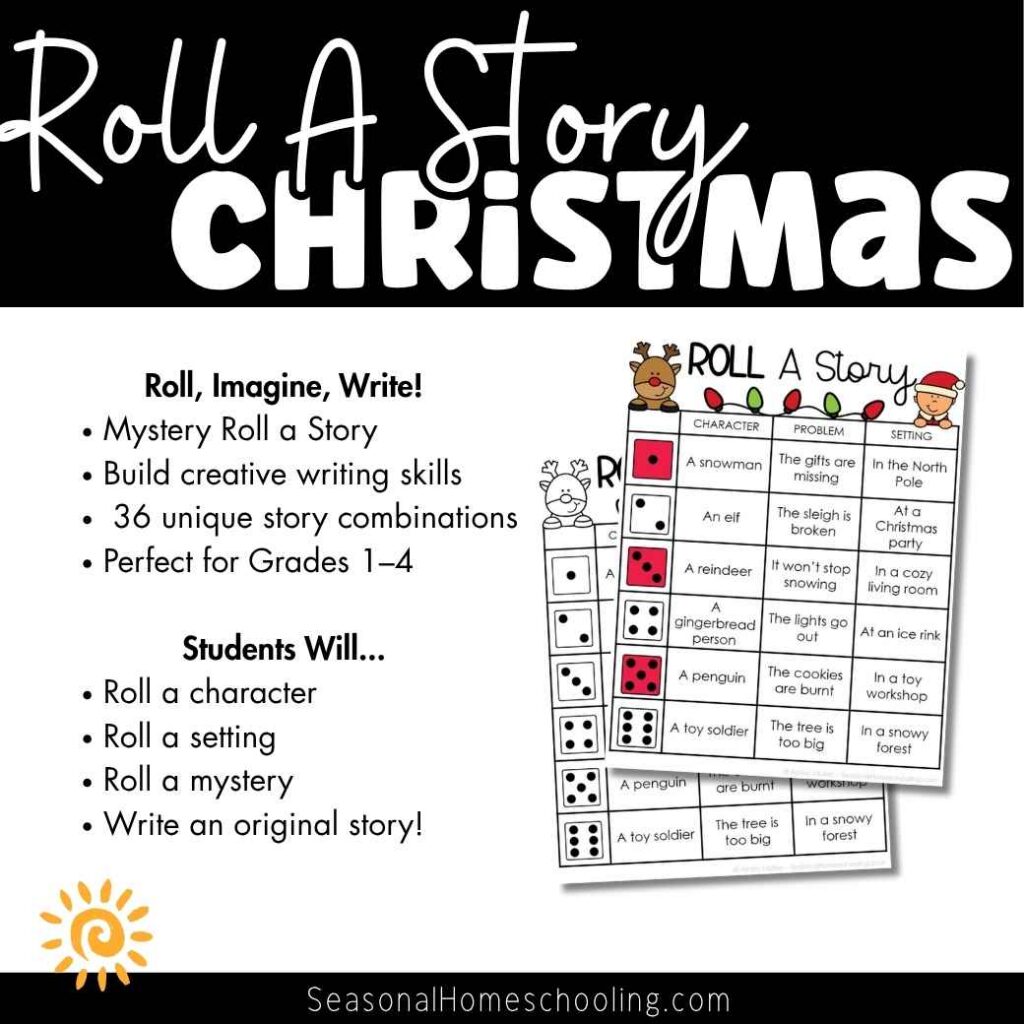
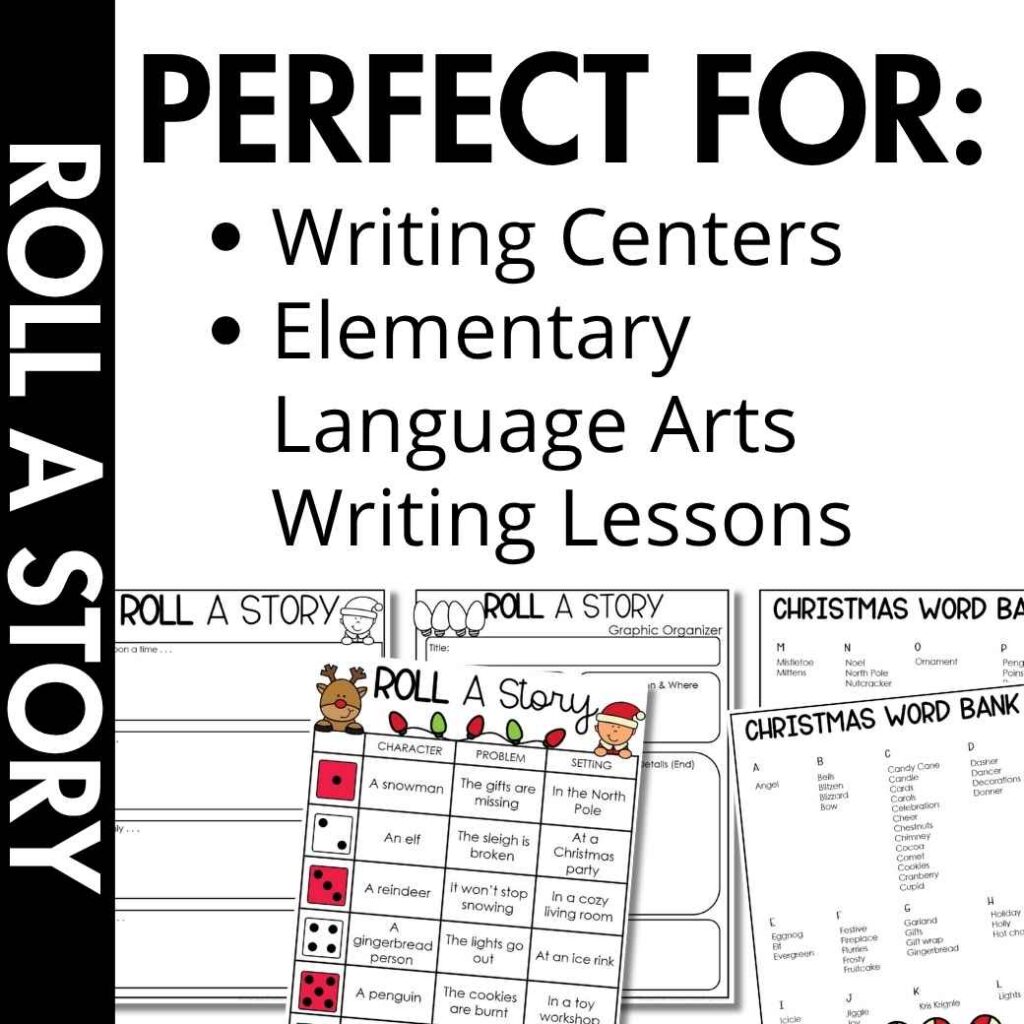
Christmas Roll A Story | Story Elements Graphic Organizer | Writing Center
Inspire your students’ creativity this winter with our engaging “Christmas Roll a Story” activity pack! Perfect for young writers, this pack provides all the tools they need to craft imaginative stories while having fun with a fun Christmas theme.
Winter Nature Studies
Even when the weather is cold, nature offers plenty of opportunities for observation and discovery.
December is a wonderful time to explore how plants, animals, and ecosystems respond to changing seasonal conditions.
Learning activities to try:
- Compare evergreen and deciduous trees.
- Observe winter birds and keep a nature journal.
- Research animals that hibernate.
- Explore how plants conserve energy during winter.
- Create a winter animal adaptation fact sheet.
- Identify signs of seasonal changes during a nature walk.
A winter nature journal is an easy activity to continue throughout the season. Children can record observations, sketch plants and animals, and write about changes they notice over time.

Making December Learning Meaningful
December can be a busy month, and regular routines often look a little different as the holidays approach.
This is a good time to embrace flexible learning. A short research project, a seasonal writing activity, a science experiment, or a good book can all provide meaningful learning opportunities.
You don’t have to fill every day with elaborate holiday activities. Choose topics that spark curiosity and give children opportunities to explore them in ways that feel natural.
Whether you’re investigating the science of snow, discovering winter celebrations around the world, exploring ancient history, or creating imaginative holiday stories, December offers plenty of opportunities to make learning memorable.
And remember, seasonal learning doesn’t have to stop when the holiday decorations come down. Winter is just getting started!
Looking for more seasonal learning ideas? Explore Seasonal Homeschooling for unit studies, creative writing activities, and printable resources designed to make elementary learning engaging throughout the year.
Want More?
December Calendars & Newsletters Editable Templates for Kindergarten 1st 2nd
December Daily Writing Prompts | December Morning Work | Writing Center
How to Reset Your Homeschool Routine After the Holidays (Without Burning Out)