

Low-Prep Writing Activities for January (That Kids Actually Enjoy)
Inside: Low-prep January writing activities kids enjoy, including roll & write ideas, winter prompts, and easy elementary writing centers.
January can feel a little… quiet. The holidays are over, routines are restarting, and kids often need time to ease back into learning. This is why January writing activities work best when they’re low-pressure, engaging, and skill-focused rather than flashy or seasonal-heavy. You don’t need elaborate prep or brand-new materials to make writing meaningful this month. A few flexible, low-prep strategies can carry you through January while building confidence, stamina, and creativity.

This post contains affiliate links, see my disclosure policy for more information.
Low-Prep Writing Activities for January (That Kids Actually Enjoy)
Whether you’re teaching in a classroom or homeschooling multiple ages, these ideas are designed to be simple, adaptable, and reusable year after year.

Why January Is Ideal for Low-Pressure Writing
January is the perfect month to reset writing expectations.
Instead of jumping straight into long compositions or rigid formats, this is a great time to:
- Rebuild writing routines after a break
- Focus on skills like idea generation, sentence-building, and storytelling
- Encourage reluctant writers without overwhelming them
Because January tends to be calmer than December, kids are often more open to experimenting with writing—as long as it doesn’t feel like “too much.” That’s where low-prep writing activities really shine.
When activities are predictable, playful, and short, students are more willing to take risks and actually enjoy the process.
Roll & Write Activities (Minimal Prep, Maximum Engagement)
Roll-and-write activities are a January favorite for a reason. They feel like a game, but they’re secretly doing a lot of heavy lifting.
All you need is:
- A dice
- A simple chart or organizer
- Paper or a recording sheet
Students roll the dice and respond based on the result—choosing a character, setting, action, or sentence starter.
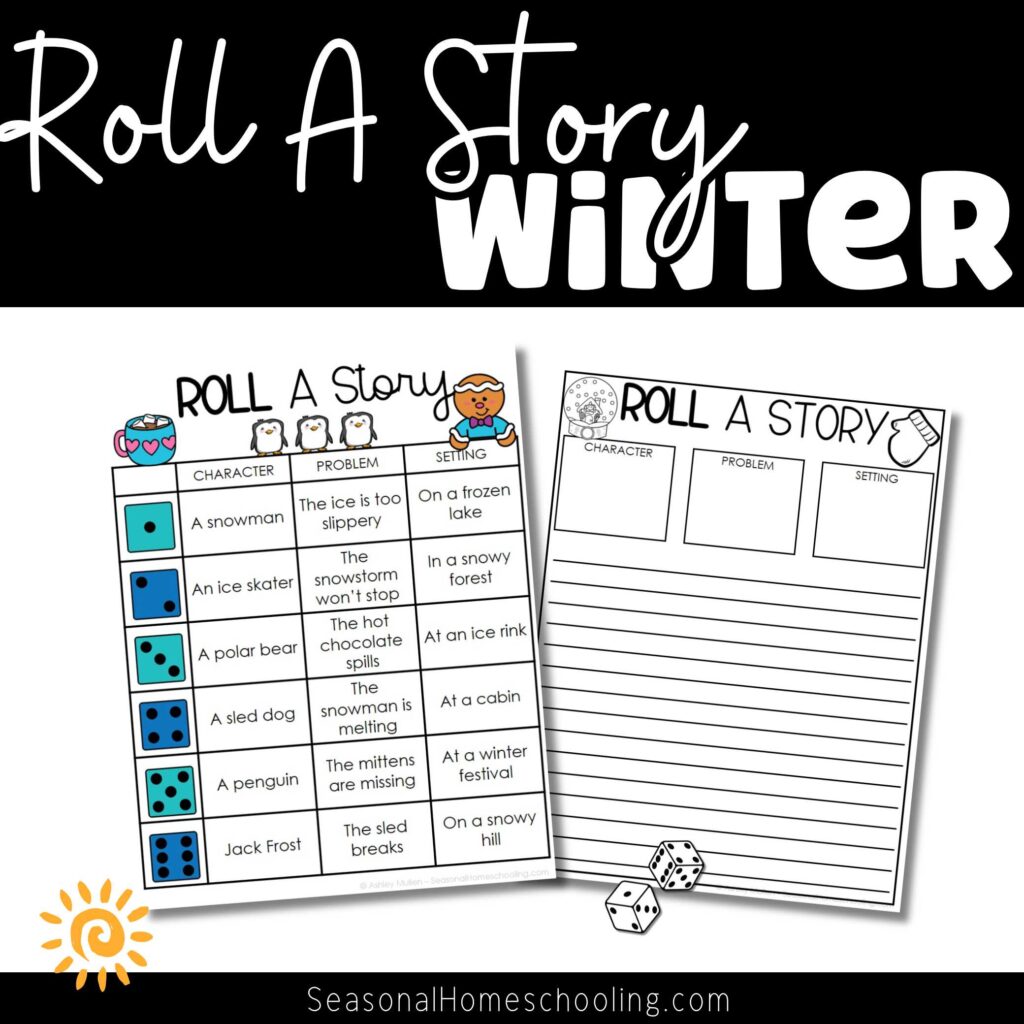
Winter Roll A Story | Story Elements Graphic Organizer | Writing Center
Inspire your students’ creativity this Winter with our engaging “Roll a Story” activity pack! Perfect for young writers, this pack provides all the tools they need to craft imaginative stories while having fun with a seasonal twist.
Why roll & write works in January:
- It removes decision fatigue (“I don’t know what to write!”)
- It feels playful without being distracting
- It works for independent work, centers, or small groups
These activities fit beautifully into elementary writing centers and are easy to differentiate:
- Younger students can draw and label
- Older students can expand ideas into paragraphs or short stories
Best of all, roll & write activities are skill-based, not tied to a specific holiday—so they’re perfect winter writing activities you can reuse every year.
Dice-Based Storytelling for Creativity & Structure
Dice-based storytelling takes roll & write one step further by focusing on story elements.
Students roll for:
- Character
- Setting
- Problem
- (Optional) Solution or ending
This structure gives kids just enough guidance to feel supported while still allowing creativity to take over.
Why this works so well in January:
- Kids are often mentally and physically tired after the holidays
- The dice eliminate pressure to “come up with something good”
- Storytelling feels fun, not forced
For mixed-age groups, this is especially effective:
- Younger kids tell the story orally, write a few sentences, or draw a picture
- Older kids turn the same roll into a full narrative
It’s one activity that naturally scales, making it ideal for homeschool families and multi-grade classrooms.

Short Daily Writing Prompts (Consistency Without Burnout)
January is a great time to rebuild daily writing habits—but “daily” doesn’t have to mean long.
Short prompts work best:
- 5–10 minutes
- One sentence to one paragraph
- Clear, open-ended questions
Examples include:
- “What is something you want to learn this year?”
- “Describe a winter day using your five senses.”
- “Write about a small moment that made you happy.”
These types of prompts support:
- Sentence fluency
- Idea development
- Confidence in sharing thoughts
They also make excellent winter writing activities because they focus on reflection, description, and storytelling rather than specific holidays.
A simple notebook or ongoing journal is all you need—no elaborate prep required.
Independent Writing Ideas That Actually Stay Independent
January is the month when teachers and parents often need writing activities that truly run themselves.
Look for activities that:
- Have clear instructions
- Feel familiar after the first use
- Don’t require constant adult feedback
Some strong low-prep options include:
- Finish-the-sentence pages
- Choice-based writing menus
- Picture-based writing prompts
- Roll-once, write-all-week activities
When students know what to expect, they gain confidence—and you gain breathing room.
These activities are perfect for:
- Morning work
- Quiet time
- Writing centers
- Independent homeschool blocks
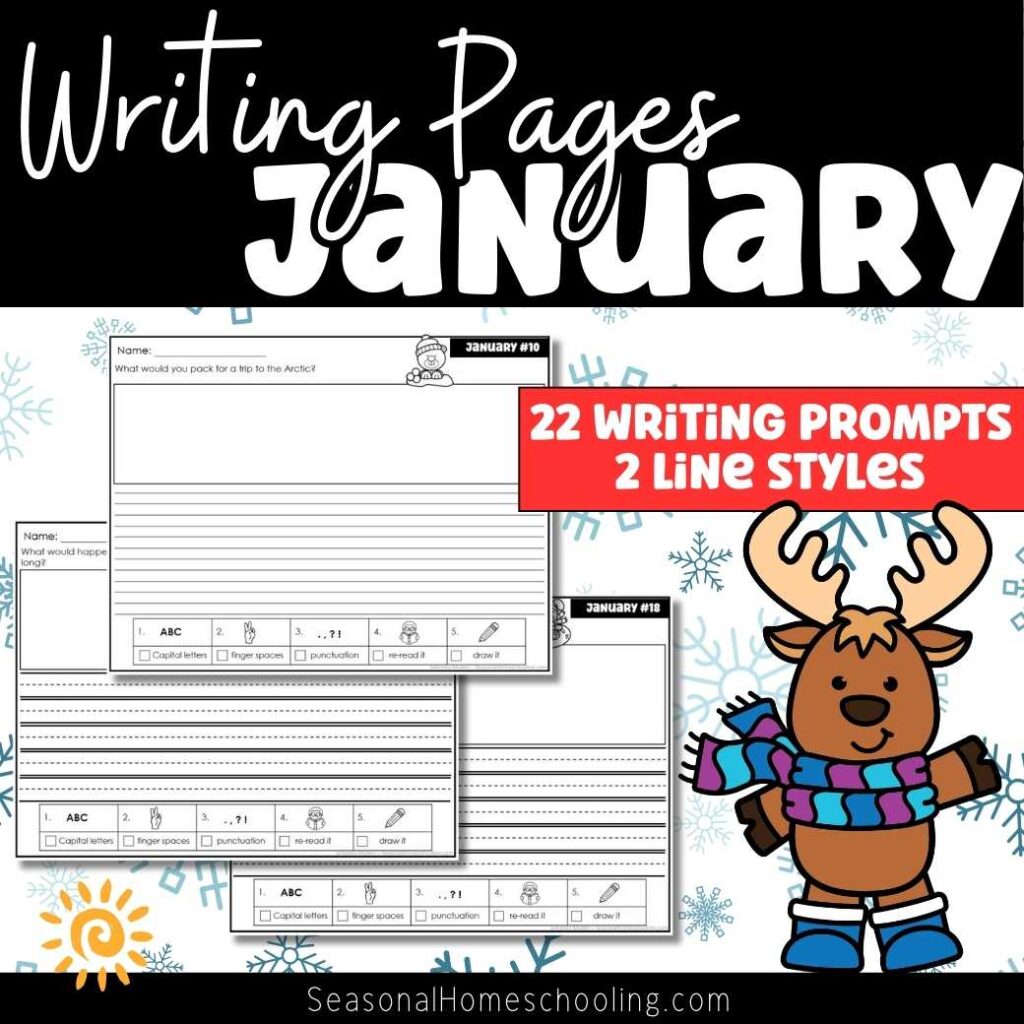
January Daily Writing Prompts
Make January writing lessons fun, meaningful, and stress-free with this 22-page Daily Writing Prompts resource designed for 1st and 2nd-grade students!
Mixed-Age Writing That Doesn’t Feel “One-Size-Fits-All”
One of the biggest challenges for homeschool families (and combo classrooms) is finding January writing activities that work across ages.
The key is open-ended structure.
Instead of assigning:
- A set number of sentences
- A specific format
Try offering:
- The same prompt with different expectations
- The same roll & write activity with flexible outcomes
For example:
- A younger child draws and labels a scene
- An older child writes a paragraph or short story using the same idea
This approach builds a shared learning experience while still meeting individual skill levels.

Why These Writing Activities Work Year After Year
The best January writing activities aren’t flashy—they’re flexible.
These ideas work because they are:
- Skill-based, not seasonal-heavy
- Easy to prep (or reuse with no prep at all)
- Adaptable for homeschool and classroom settings
- Simple enough to repeat without boredom
January doesn’t need complicated plans. It needs writing that feels achievable, engaging, and just challenging enough to spark momentum for the rest of the year.
When kids enjoy writing in January, everything that follows gets easier.
Want More?
How to Teach Writing in Early Elementary: A Guide for New Homeschool Parents
Fun and Engaging Writing Prompts for Kids: Inspire Creativity and Build Writing Skills


