

How to Help Reluctant Writers: 7 Fun Strategies to Get Kids Writing
Inside: 7 fun ways to help reluctant writers get started, build confidence, and enjoy creative writing at home or in the classroom.
Does your child stare at a blank page when it’s time to write? Do you hear “I don’t know what to write about” every time you bring out the writing notebook? Or perhaps your students have plenty to say out loud but struggle to get those ideas down on paper.
This post contains affiliate links, see my disclosure policy for more information.
How to Help Reluctant Writers: 7 Fun Strategies to Get Kids Writing
You’re not alone! Many children find writing challenging, especially when they’re expected to come up with an idea, organize their thoughts, choose the right words, and spell everything correctly at the same time.
The good news is that writing doesn’t have to begin with a blank page and a big assignment.
With a few simple strategies, you can make writing feel more manageable, creative, and even fun. Whether you’re homeschooling your children or teaching an elementary classroom, these seven strategies can help reluctant writers find their words and build confidence.
Why Do Some Children Struggle With Writing?
Before we look at ways to encourage reluctant writers, it helps to understand why writing can feel so difficult.
For some children, the biggest challenge is generating ideas. They may understand a topic perfectly well but have no idea how to turn their thoughts into a story.
Others struggle with spelling, handwriting, or organizing sentences. When a child is concentrating on all these skills at once, the actual act of writing can become overwhelming.
Some children also worry about making mistakes. If they believe every sentence needs to be perfect, getting started can feel intimidating.
That’s why it helps to separate the creative process from the mechanics of writing. Give children opportunities to explore ideas, experiment with words, and experience success before worrying about every spelling mistake or punctuation mark.
Here are seven ways to get started.

1. Let Children Talk Before They Write
Sometimes the easiest way to help a child write is to take writing off the table for a few minutes!
Before asking your child to write a story, invite them to tell you one. Ask questions, encourage them to explain their ideas, and show genuine interest in what they have to say.
For example, you might ask:
- What would happen if your pet could talk?
- If you could invent a new holiday, what would people celebrate?
- What might happen if a friendly monster moved into your house?
- If you discovered a secret door in your bedroom, where would it lead?
Let the conversation develop naturally. You don’t need to correct their grammar or insist that their story makes perfect sense. The goal is to help them discover that they already have ideas worth sharing.
Once your child has talked through a story, ask them to write down one part they particularly liked. You could also help them jot down three key ideas to use as a starting point.
Try this: During your next homeschool writing lesson or classroom writing block, spend five minutes talking about the topic before anyone picks up a pencil.
2. Give Children Choices
A blank page can feel overwhelming because it offers endless possibilities. Sometimes, narrowing those possibilities makes all the difference.
Instead of telling your child to write a story about anything they like, offer a few choices.
They could choose between three characters, such as a dragon, a robot, or a mischievous kitten. Then let them select a setting, such as a forest, a castle, or a school playground. Then introduce a problem for the character to solve.
Suddenly, your child has the building blocks of a story without having to invent everything from scratch.
This approach works especially well for children who have lots of ideas but struggle to organize them. It also gives them a sense of ownership because they get to make decisions about their writing.
Try this: Write three characters, three settings, and three problems on separate slips of paper. Let your child choose one from each group and use them to create a story.

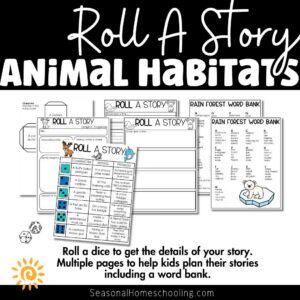
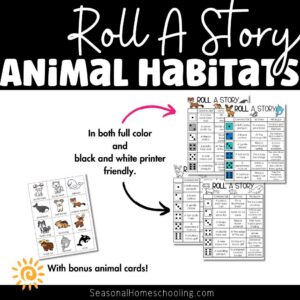
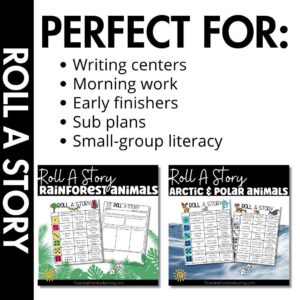
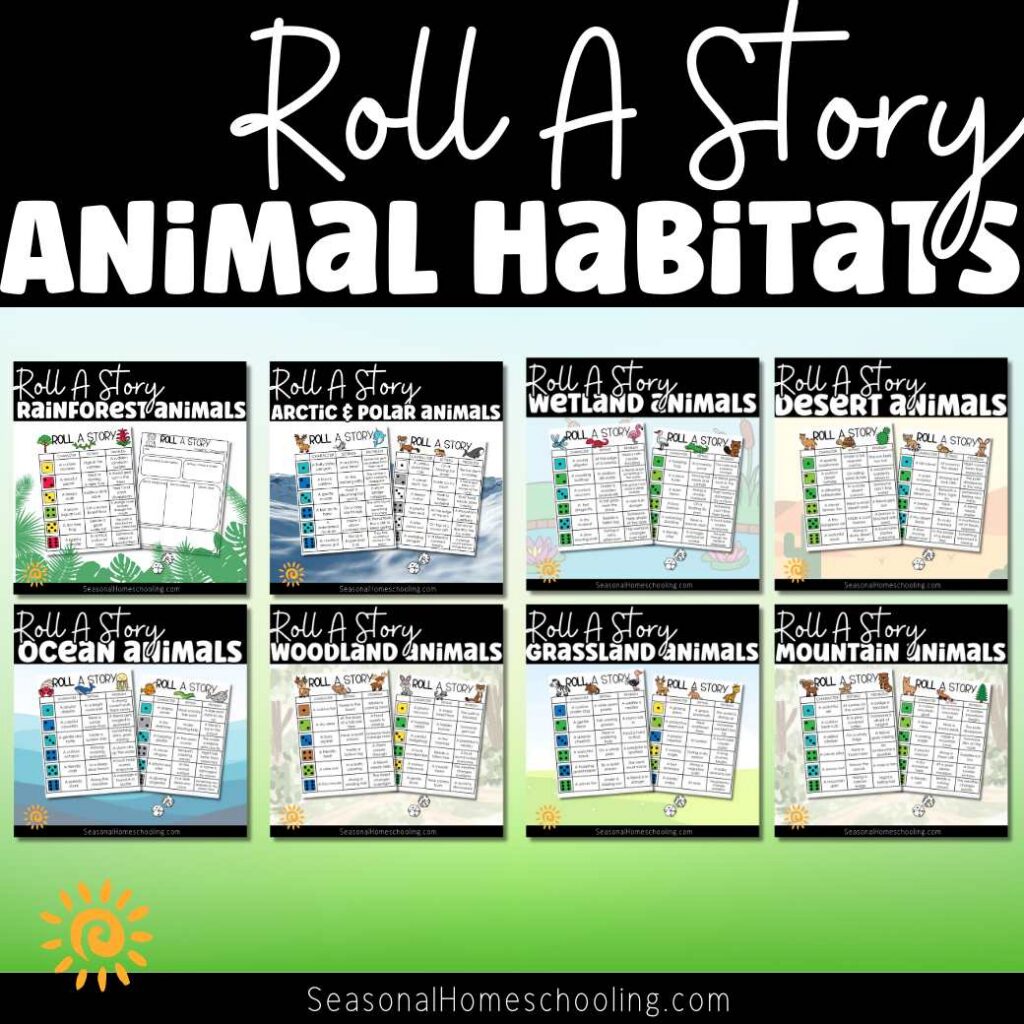
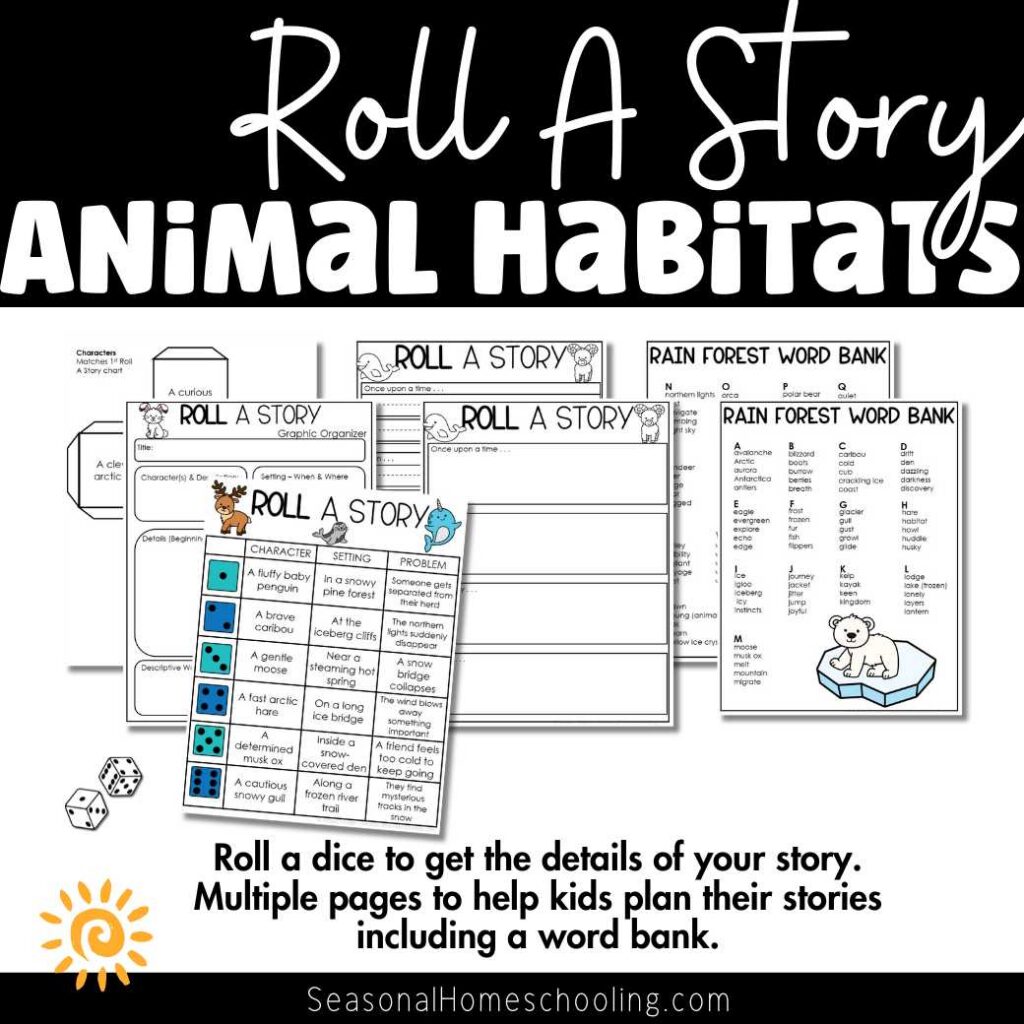
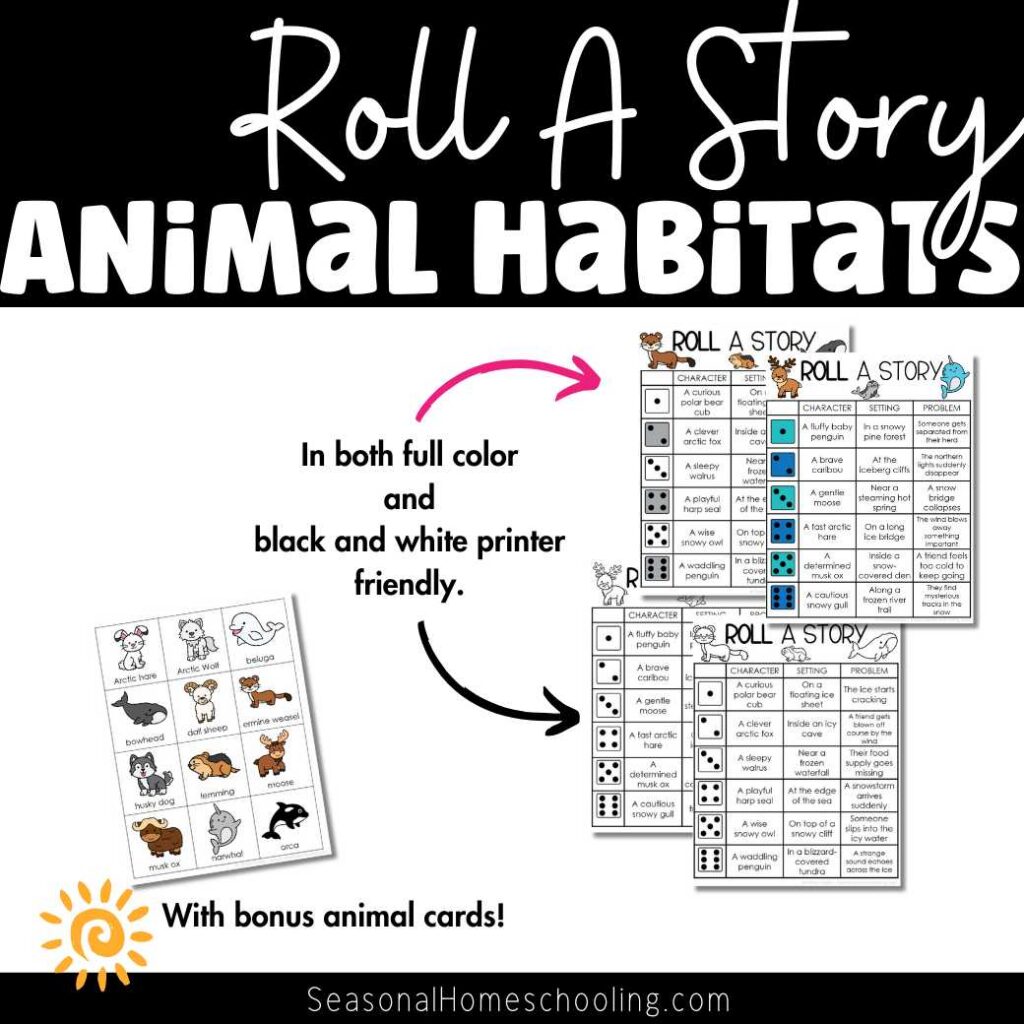
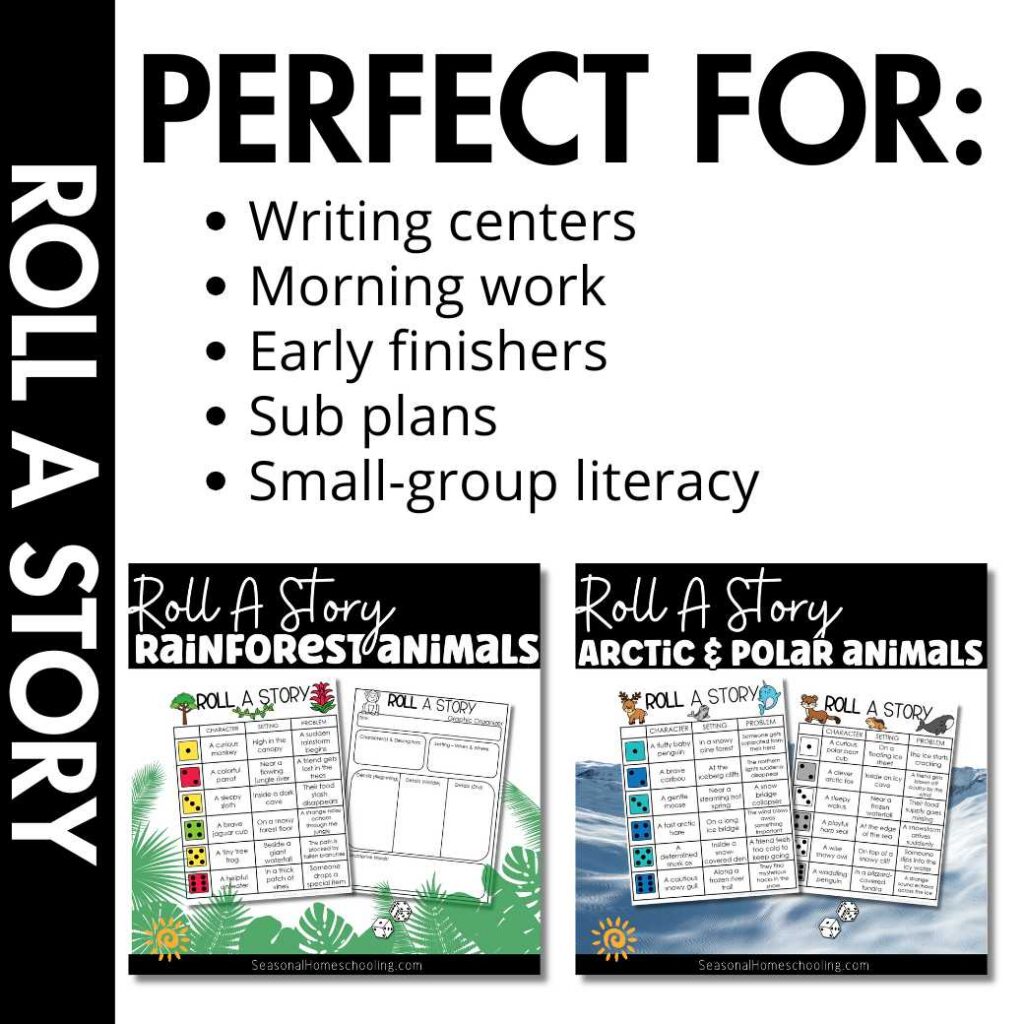
Animal Habitats Roll A Story | Creative Writing Activities Graphic Organizers
Introduce your Grades 1–4 students to creative storytelling across multiple environments with the Animal Habitats Roll A Story Growing Bundle, a collection of engaging roll a story writing activities that build strong story elements through fun, low-prep writing centers.
3. Use Silly Writing Prompts
Children don’t always need a serious topic to develop meaningful writing skills. In fact, a little silliness can be just what reluctant writers need!
Funny writing prompts encourage children to think creatively without worrying about getting the answer right. There are no wrong answers when you’re inventing a story about a penguin who opens a pizza shop or a witch whose broom refuses to fly.
Here are a few prompts to try:
- A pumpkin rolls away just before the Halloween party begins.
- A friendly ghost is afraid of the dark.
- Your teacher arrives at school riding a giant dinosaur.
- A monster discovers that it has accidentally eaten everyone’s homework.
- A scarecrow wakes up one morning and decides to become a detective.
Ask your child to choose a prompt and explain what might happen next. They could write a few sentences, develop a longer story, or draw a picture to accompany their writing.
Try this: Keep a small jar of writing prompts on your homeschool shelf or classroom writing table. When a child doesn’t know what to write, let them pick a surprise prompt.

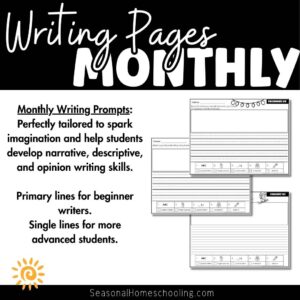
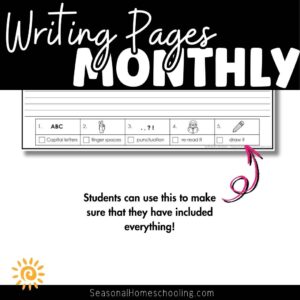
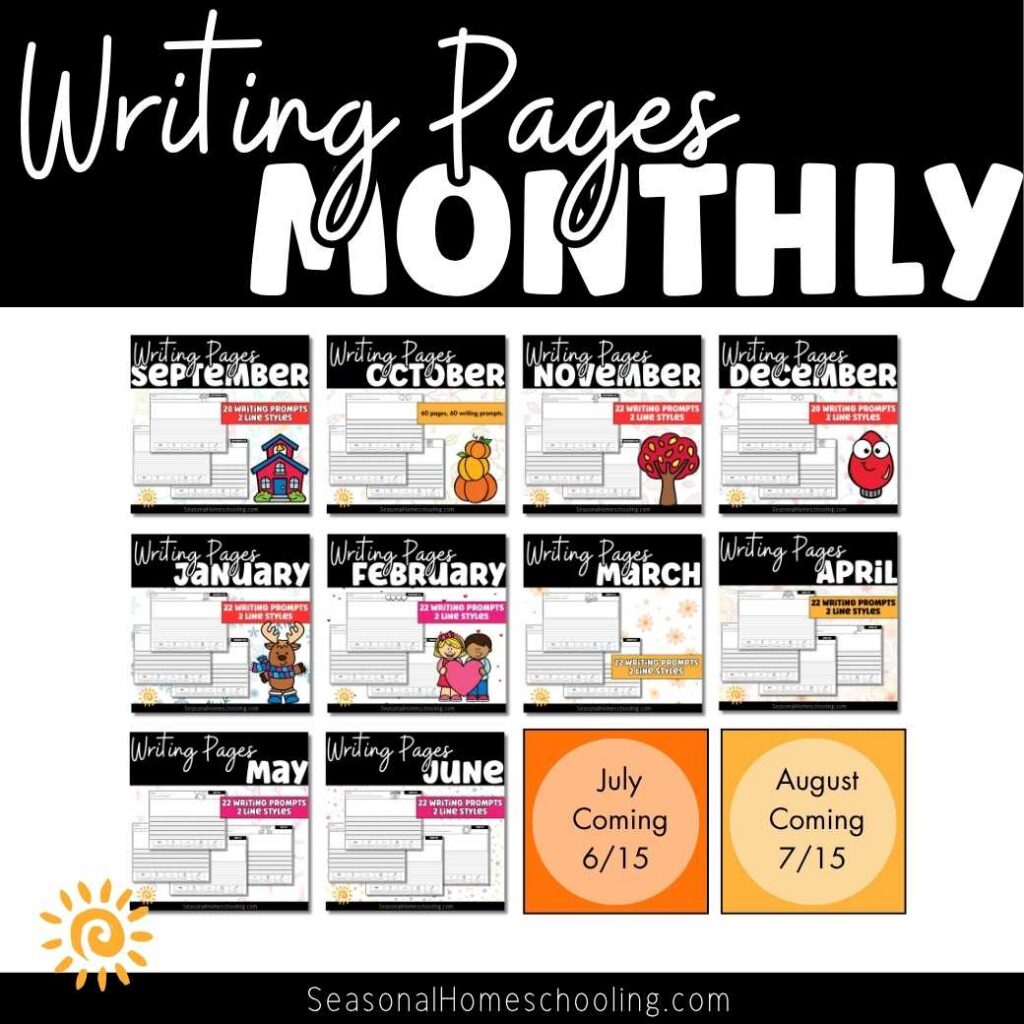
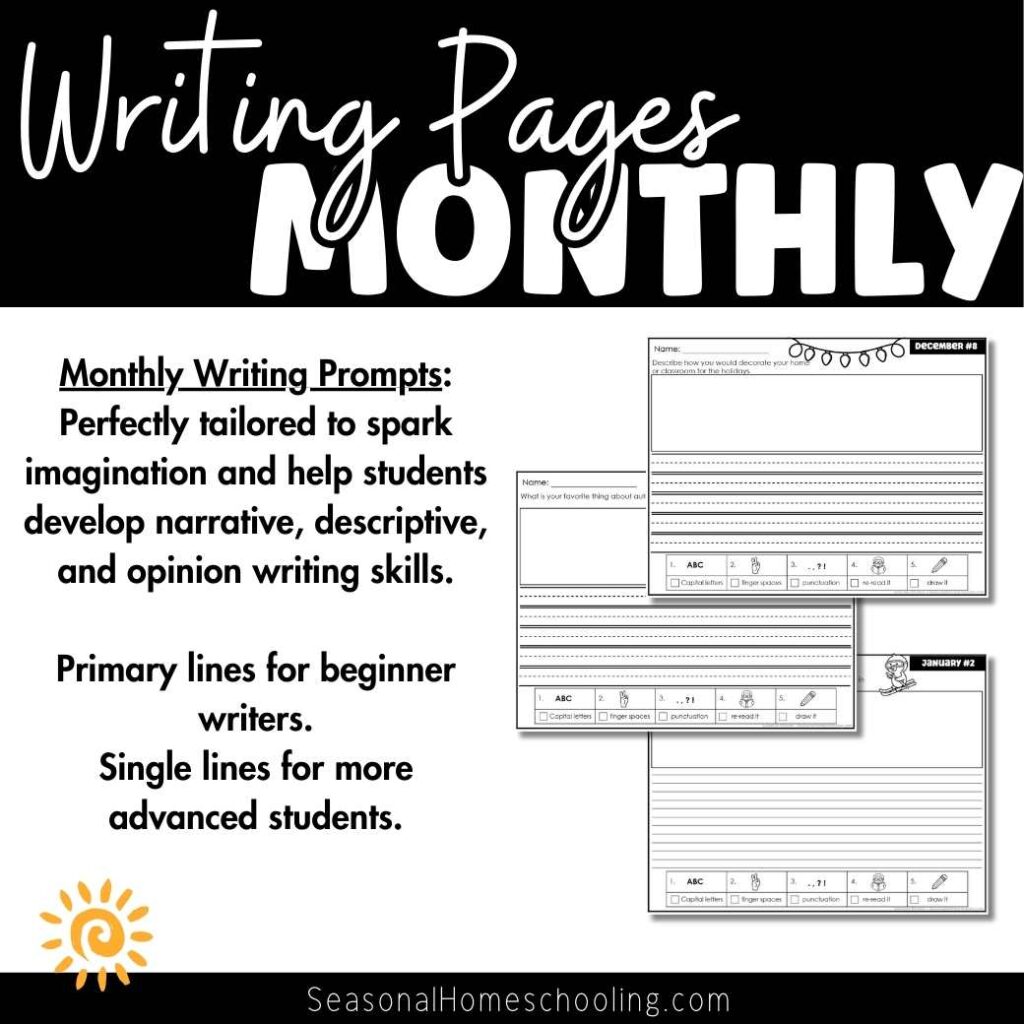
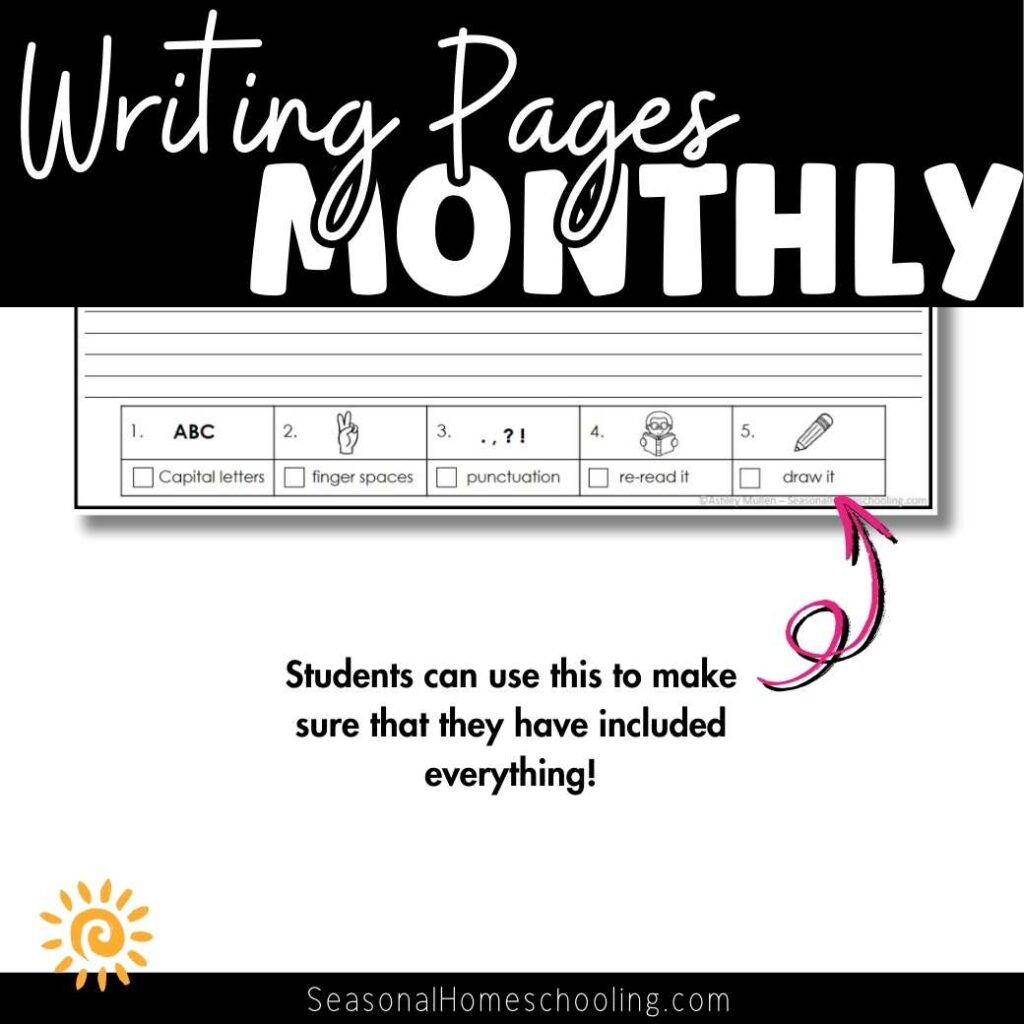
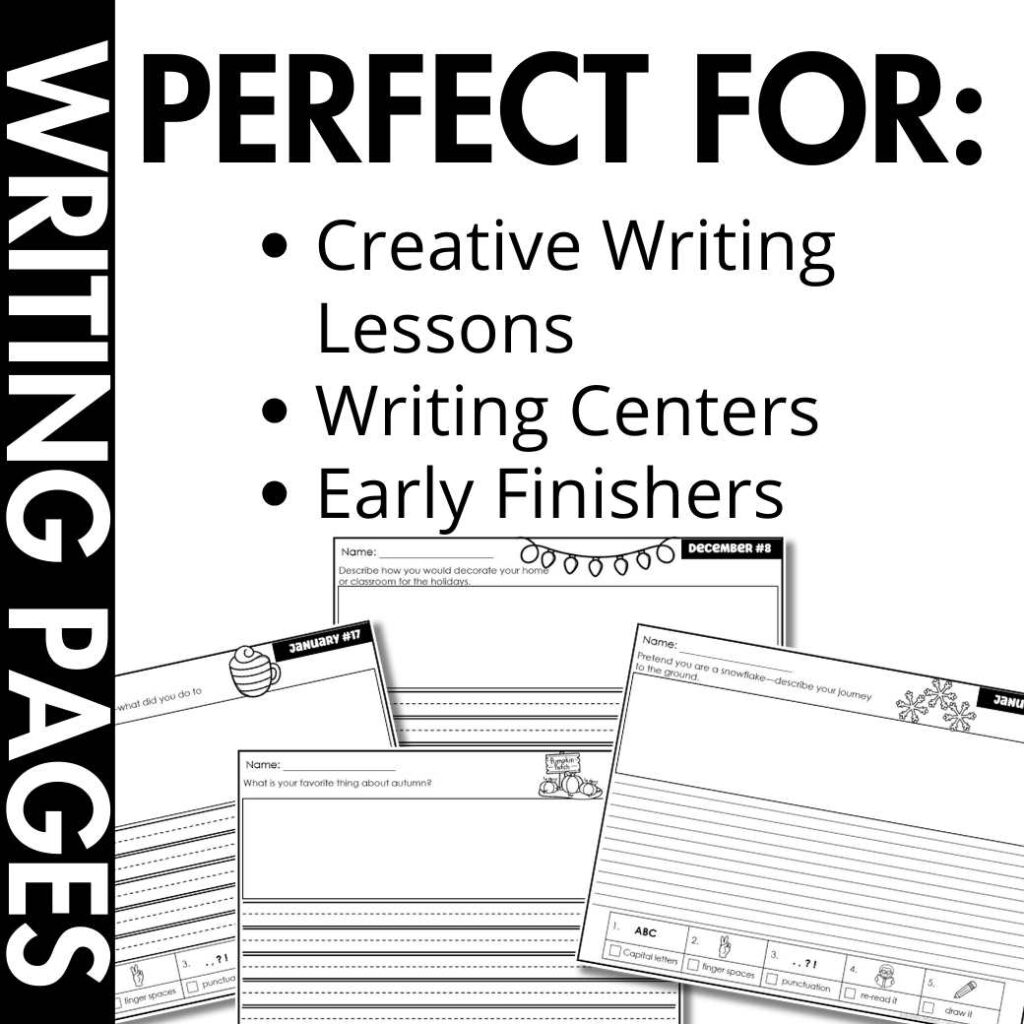
Daily Journal Bundle | Daily Writing Prompts for 1st and 2nd Grade
Make writing lessons fun, engaging, and stress-free all year long with this Growing Bundle of Monthly Journal Writing Prompts! Perfect for 1st and 2nd-grade students, this bundle includes creative and skill-building prompts for every month—October, November, December, January, and beyond!
4. Let Children Draw Before They Write
For some children, drawing is a much easier way to express an idea than writing a sentence.
Rather than treating drawing as a reward for finishing their writing, use it as part of the writing process.
Invite your child to sketch the main character, draw the setting, or illustrate the problem in their story. Then ask them to explain what’s happening in the picture.
You might ask:
- Who is in your picture?
- Where are they?
- What has just happened?
- What do you think will happen next?
Their answers can become the first sentences of their story.
You can also encourage children to create a simple three-part picture sequence showing the beginning, middle, and end of a story. This provides a visual structure that helps them organize their ideas before they begin writing.
For younger writers, you might write down a sentence they dictate and let them copy it or add another sentence of their own. Older children can use their pictures as planning tools before writing a complete paragraph or story.
The important thing is that drawing helps children develop and organize their ideas. It isn’t a substitute for writing; it’s a bridge that can make writing easier to begin.
Try this: Give your child a sheet of paper divided into three boxes. Ask them to draw what happens at the beginning, middle, and end of an imaginary story. Then have them write one sentence for each picture.
5. Use Word Banks to Get Ideas Flowing
Have you ever watched a child struggle to write a sentence because they can’t think of the word they need?
Sometimes, the problem isn’t a lack of ideas. It’s finding the vocabulary to express them.
Word banks can help. A word bank is simply a collection of words related to a topic that children can refer to while writing.
For a Halloween story, your word bank might include:
Characters: witch, monster, ghost, black cat, skeleton
Settings: haunted house, pumpkin patch, dark forest, spooky school
Action words: crept, stumbled, whispered, raced, discovered
Describing words: mysterious, enormous, glittering, crooked, mischievous
With these words in front of them, children have a starting point. They can choose words that appeal to them, combine them in unexpected ways, and use them to develop their own ideas.
Word banks are especially helpful for children who struggle with spelling or have difficulty retrieving the words they want to use. They also provide an opportunity to introduce new vocabulary in a meaningful context.
You can create word banks together, use vocabulary from a current unit study, or prepare themed lists for different writing activities.
Try this: Choose a topic your child enjoys and brainstorm ten related words together. Keep the list nearby during writing time and encourage your child to use any words that inspire them.
6. Break Writing Into Smaller Steps
Imagine being told to write an entire story when you’re already unsure how to begin. For a reluctant writer, that can feel like an enormous task.
Instead of focusing on the finished product, break writing into small, achievable steps.
For example, you could approach a story like this:
- Choose a character.
- Decide where the story takes place.
- Think of a problem the character encounters.
- Write one sentence introducing the character.
- Add a sentence explaining the problem.
- Write what the character does to solve it.
- Finish with a sentence explaining how the story ends.
Your child doesn’t need to complete every step in one sitting. Depending on their age, writing ability, and confidence, you might work on just one or two sentences at a time.
You can also offer sentence starters to make getting started easier.
Examples include:
- One day, I discovered…
- Everything was going well until…
- Suddenly, something unexpected happened.
- The character knew they had to…
- In the end…
These prompts give children a clear starting point without taking away their opportunity to be creative.
As their confidence grows, you can gradually reduce the amount of support you provide.
Try this: Set a small goal for your next writing session. Instead of asking your child to finish a story, aim to write just three sentences. Celebrate completing the goal before moving on to anything else.

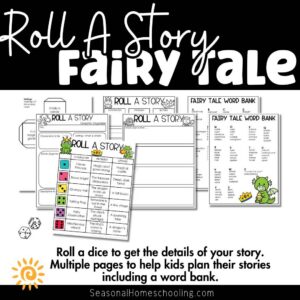
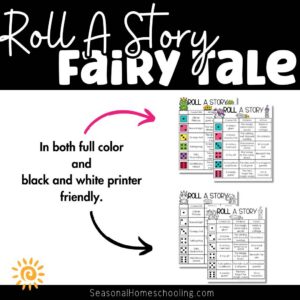
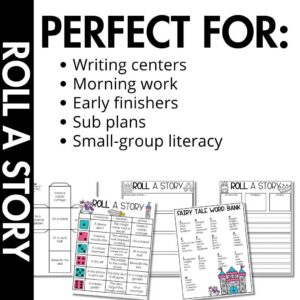
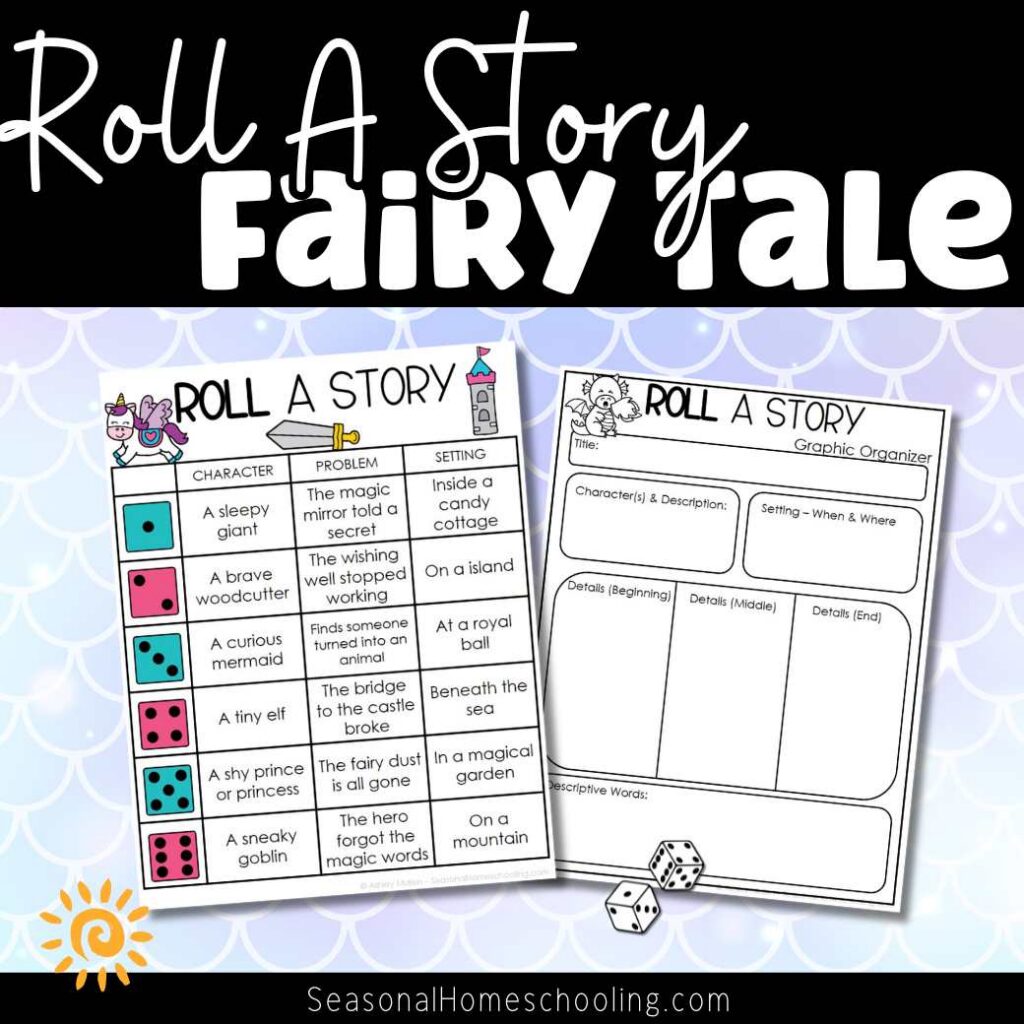
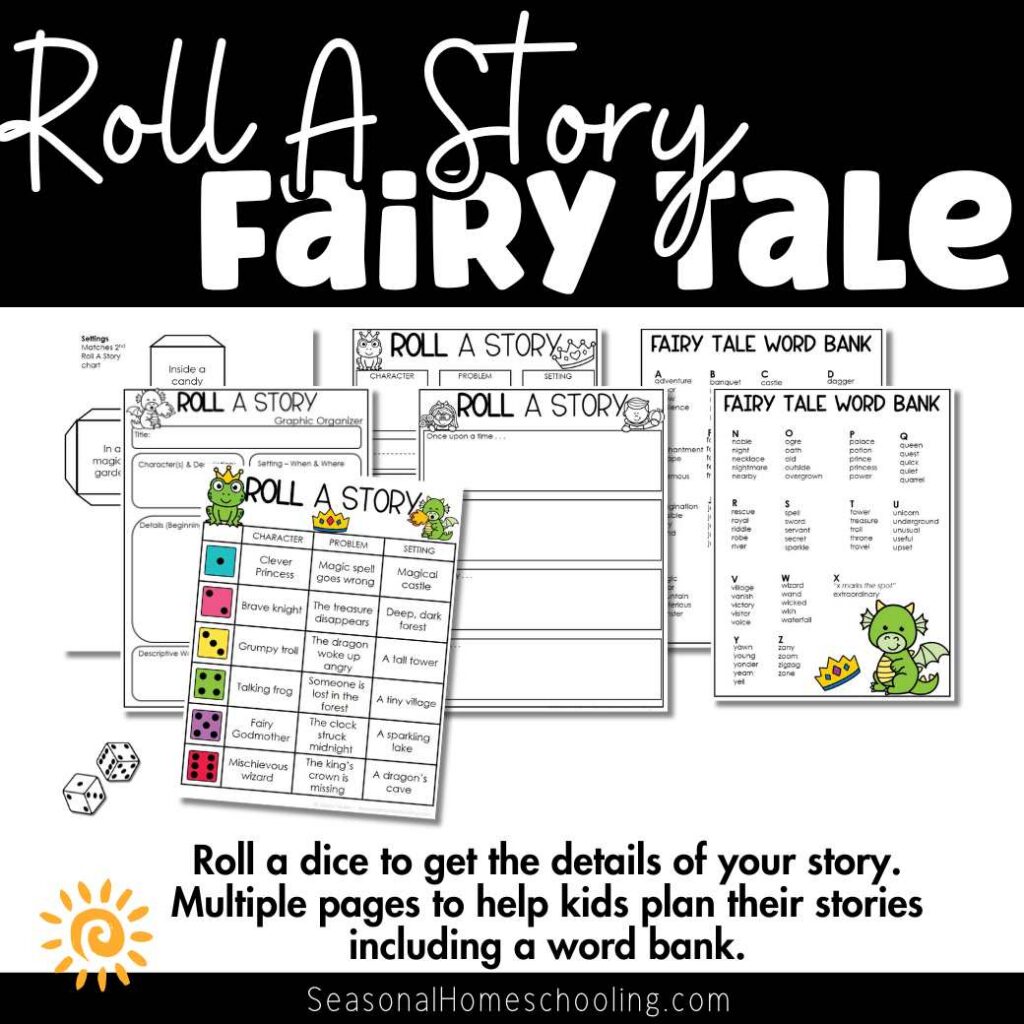
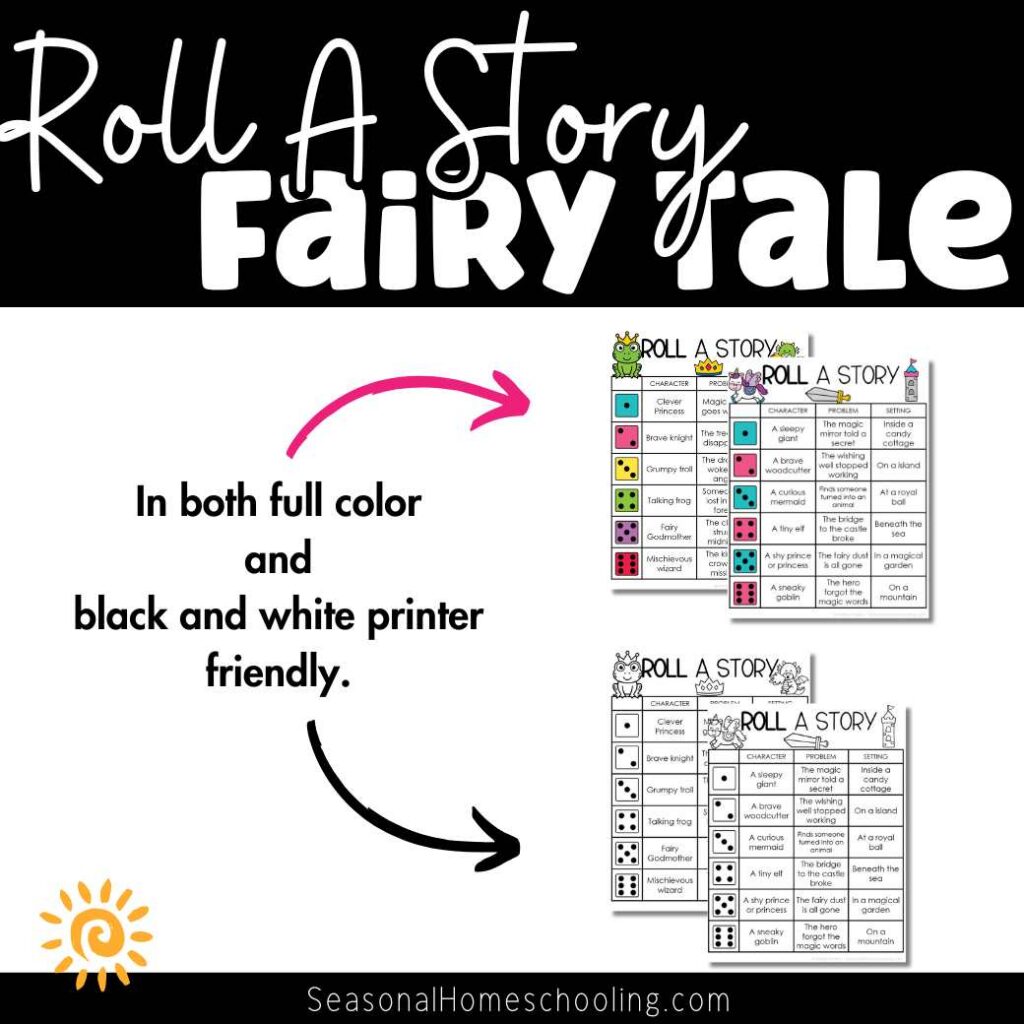
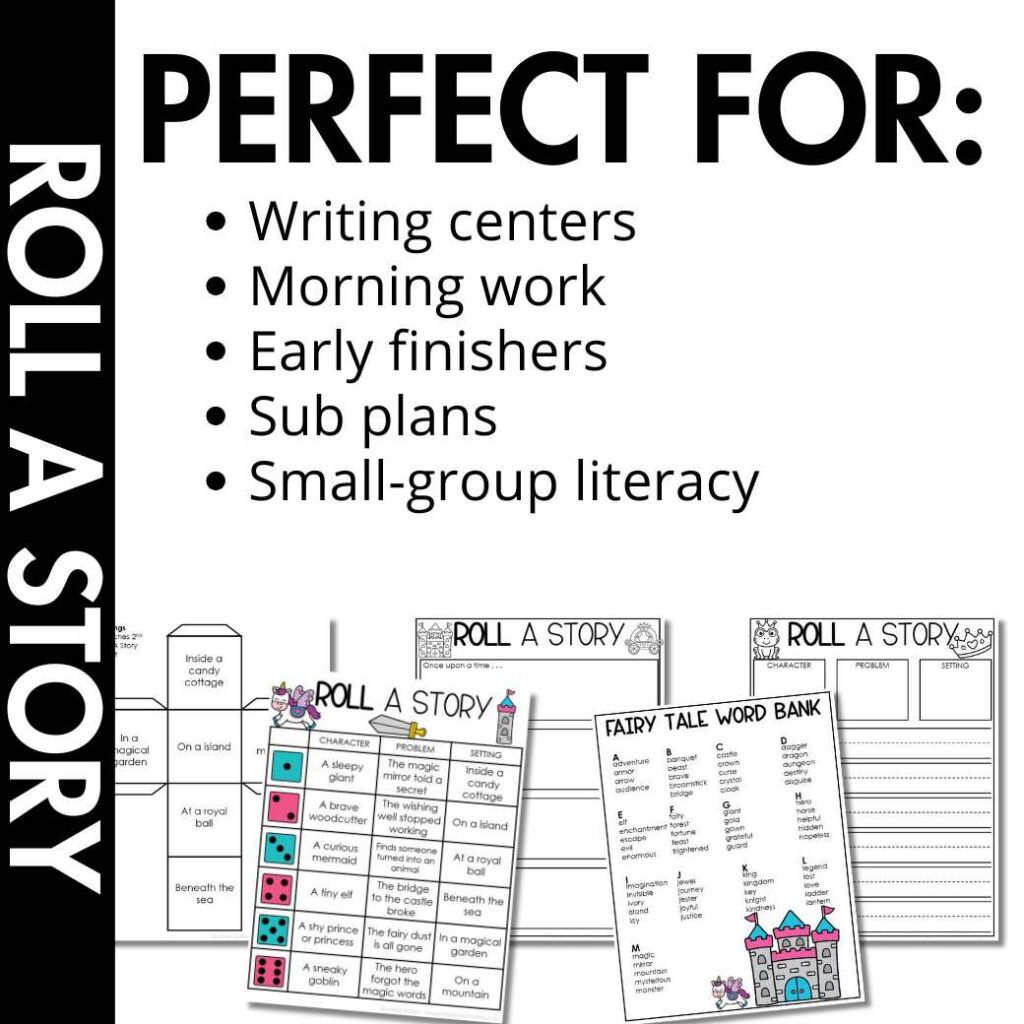
Fairy Tale Roll A Story | Story Elements Graphic Organizer Writing Center
Bring magic, imagination, and engaging literacy practice into your classroom with Fairy Tales Roll A Story, a creative writing activity for Grades 1–4. This fairy-tale themed resource gives students meaningful practice, review, and storytelling opportunities—perfect for writing centers, sub plans, early finishers, or fun narrative creative writing sessions.
7. Turn Writing Into a Game
For many reluctant writers, the word assignment can take some of the fun out of writing before they’ve even started.
Games offer a different approach. They introduce surprise, choice, and a clear starting point, making writing feel more like play than work.
You could try:
Roll-a-story games: Children roll dice or select from prepared lists to choose a character, setting, and problem. The combinations create unexpected story ideas, so children don’t have to invent everything themselves.
Story starter challenges: Give children the first sentence of a story and ask them to decide what happens next.
Picture prompts: Show children an unusual scene and invite them to imagine what’s happening. Who are the characters? What happened just before this moment? What might happen next?
Pass-the-story games: One person begins a story with a sentence, and another adds the next sentence. Continue taking turns until you’ve created a complete, often wonderfully silly, story.
Writing challenges: Invite children to write a story using five unusual words, create the funniest ending they can imagine, or invent a character who has an unexpected problem to solve.
These activities can work during homeschool lessons, literacy centers, morning work, early-finisher time, or a short afternoon writing session.
They also make it easier to practise important writing skills without every activity feeling like a formal lesson.
Try this: Choose a writing game that takes no more than ten minutes. Keep the first session short and fun, and let your child decide whether they’d like to continue their story later.

A Few More Tips for Encouraging Reluctant Writers
Along with these seven strategies, a few simple habits can help children develop a more positive relationship with writing.
Celebrate ideas before correcting mistakes. When a child shares a story, respond to what they’ve created. Tell them what made you laugh, which detail surprised you, or what you’d like to know more about. You can work on spelling, punctuation, and grammar separately.
Choose topics that interest them. A child who isn’t excited about writing a report on an unfamiliar subject might happily write a page about their favourite animal, a made-up superhero, or an imaginary adventure.
Keep writing sessions manageable. Short, successful sessions can be more productive than long periods of frustration. Adjust the amount of writing to suit the individual child.
Provide different ways to get started. One child might need a picture prompt, another might prefer talking through ideas, and another might love choosing a character from a list. Experiment to find what helps your child most.
Focus on progress, not perfection. A child who writes three independent sentences today may be ready to write a full paragraph in the future. Building confidence takes time, and every successful attempt gives them another opportunity to practise.
If writing remains consistently distressing despite support, consider whether handwriting, spelling, language, or other underlying difficulties are making the task harder. Your child’s teacher or an appropriate learning specialist can help you identify additional support if needed.
Make Writing Fun This Halloween With Roll a Story
If your children love Halloween but struggle to come up with their own stories, a themed writing game can be a great place to begin.
My Halloween Roll a Story resource gives children a playful way to generate story ideas by combining characters, settings, and problems. Instead of staring at a blank page wondering what to write, they have a starting point for an imaginative adventure.
It’s designed to make creative writing more approachable for elementary-age children and can be used in a variety of ways.
- For homeschoolers: Add it to your language arts lessons for a seasonal writing activity.
- For classroom teachers: Use it during literacy centers, morning work, or independent writing time.
- For reluctant writers: Let the story combinations provide the initial inspiration, then encourage children to develop the ideas in their own way.
- For extra flexibility: Use the prompts without dice if you prefer children to choose their own combinations.
Children can create silly Halloween stories, practise organizing their ideas, and work on turning their imaginations into written sentences.


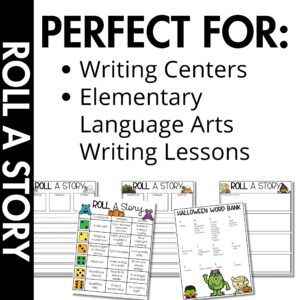

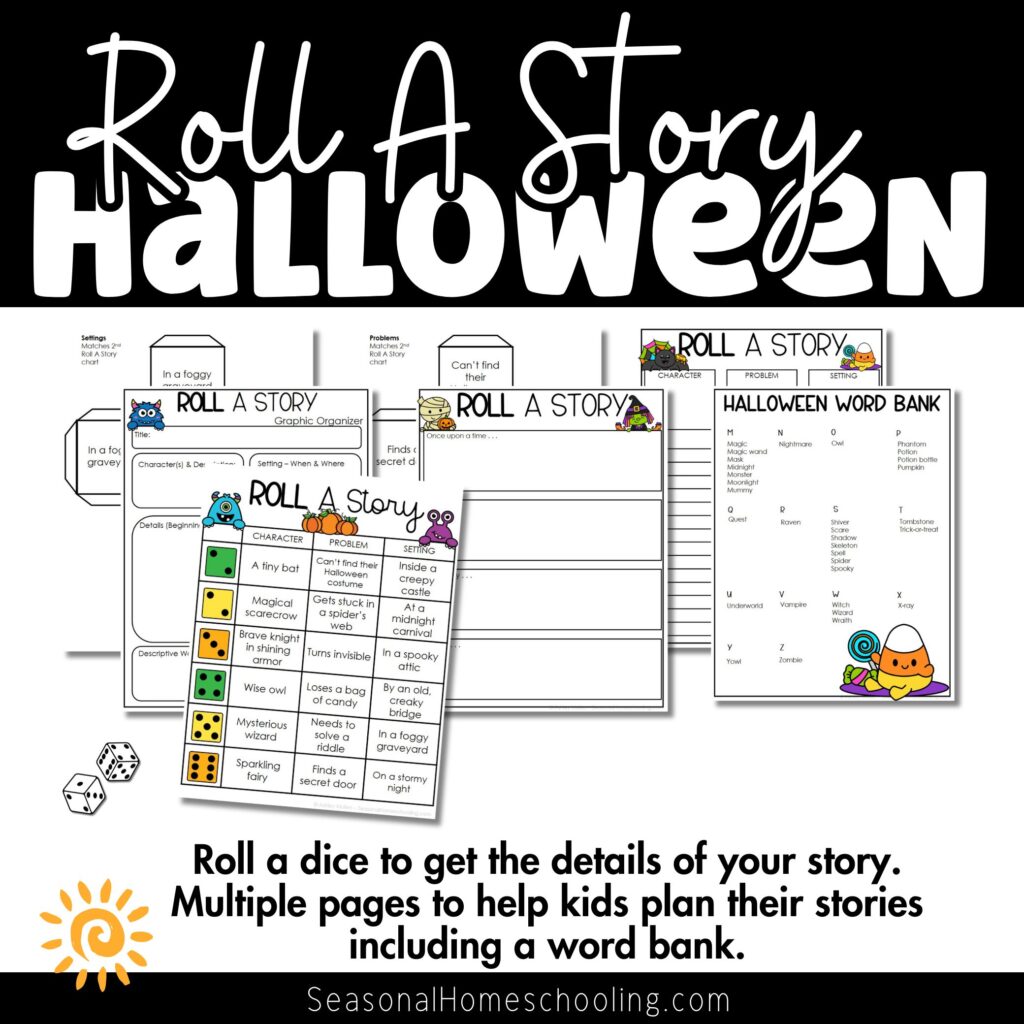


Halloween Roll A Story | Halloween and Monster Story Elements Graphic Organizer
Inspire your students’ creativity this autumn with our engaging “Halloween Roll a Story” activity pack! Perfect for young writers, this pack provides all the tools they need to craft imaginative stories while having fun with a Halloween spooky theme.
Helping Reluctant Writers Find Their Words
Helping a reluctant writer doesn’t mean finding the perfect worksheet or convincing a child to write a whole page every day.
Often, it starts with making the first step easier.
Let children talk through their ideas. Give them choices. Introduce silly prompts, drawing, and word banks. Break writing into manageable steps, and look for opportunities to make the process playful.
Most importantly, help children see that their ideas are worth writing down.
When writing becomes a chance to imagine, experiment, and tell stories rather than a test of spelling and handwriting, children may begin to approach it with more confidence.
Start with one strategy, keep expectations manageable, and build from there. You might be surprised by the stories your reluctant writer has been waiting to tell!
Want More?
Using Roll a Story Activities for Reluctant Writers
How to Teach Writing in Early Elementary: A Guide for New Homeschool Parents
Fun and Engaging Writing Prompts for Kids: Inspire Creativity and Build Writing Skills


