Using Roll a Story Activities for Reluctant Writers
Inside: Discover how Roll a Story activities help reluctant writers build confidence, generate ideas, and enjoy creative writing at home or school.
Reluctant writers often struggle with confidence, idea generation, organization, or simply finding writing enjoyable. The good news is that the right activities can transform writing from a stressful task into a creative adventure. One of the most effective tools for engaging reluctant writers is Roll a Story activities.
This post contains affiliate links, see my disclosure policy for more information.
Using Roll a Story Activities for Reluctant Writers
Writing can be one of the most challenging subjects for many children. While some students eagerly fill pages with stories and ideas, others stare at a blank piece of paper, unsure where to begin. If you have a child who groans when writing time starts, you’re not alone.
Whether you’re homeschooling, teaching in a classroom, or looking for fun literacy activities at home, Roll a Story printables can help students develop writing skills while having fun.

Why Some Children Become Reluctant Writers
Before we discuss solutions, it helps to understand why some students resist writing.
Common reasons children become reluctant writers include:
- Fear of making mistakes
- Difficulty generating ideas
- Limited vocabulary
- Perfectionism
- Struggles with spelling or handwriting
- Feeling overwhelmed by open-ended assignments
- Lack of interest in traditional writing prompts
Many children are capable storytellers when speaking aloud but become stuck when asked to put those ideas on paper. They often need additional support and structure to help bridge the gap between imagination and written expression.

Strategies for Supporting Reluctant Writers
When teaching reluctant writers, the goal is to reduce anxiety while increasing engagement.
Some effective reluctant writer strategies include:
Make Writing Feel Like Play: Children learn best when they are engaged and having fun. Turning writing into a game can remove much of the pressure that often comes with traditional writing assignments.
Provide Built-In Structure Many reluctant writers struggle with the question, “What should I write about?”. Providing characters, settings, and story problems gives students a starting point instead of expecting them to generate everything independently.
Offer Choices: Giving children choices increases ownership and motivation. When students feel they have some control over their writing, they are often more willing to participate.
Focus on Creativity Before Perfection: During the drafting stage, encourage students to focus on getting ideas on paper rather than worrying about spelling, grammar, or neatness. Editing can come later.

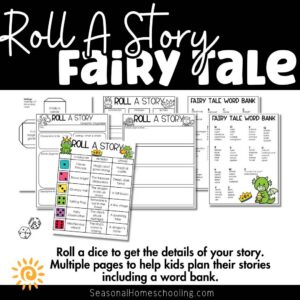
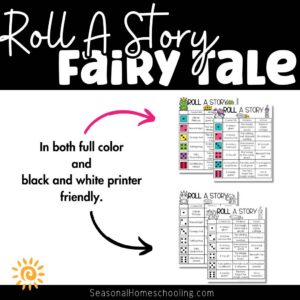
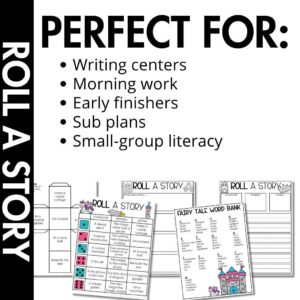
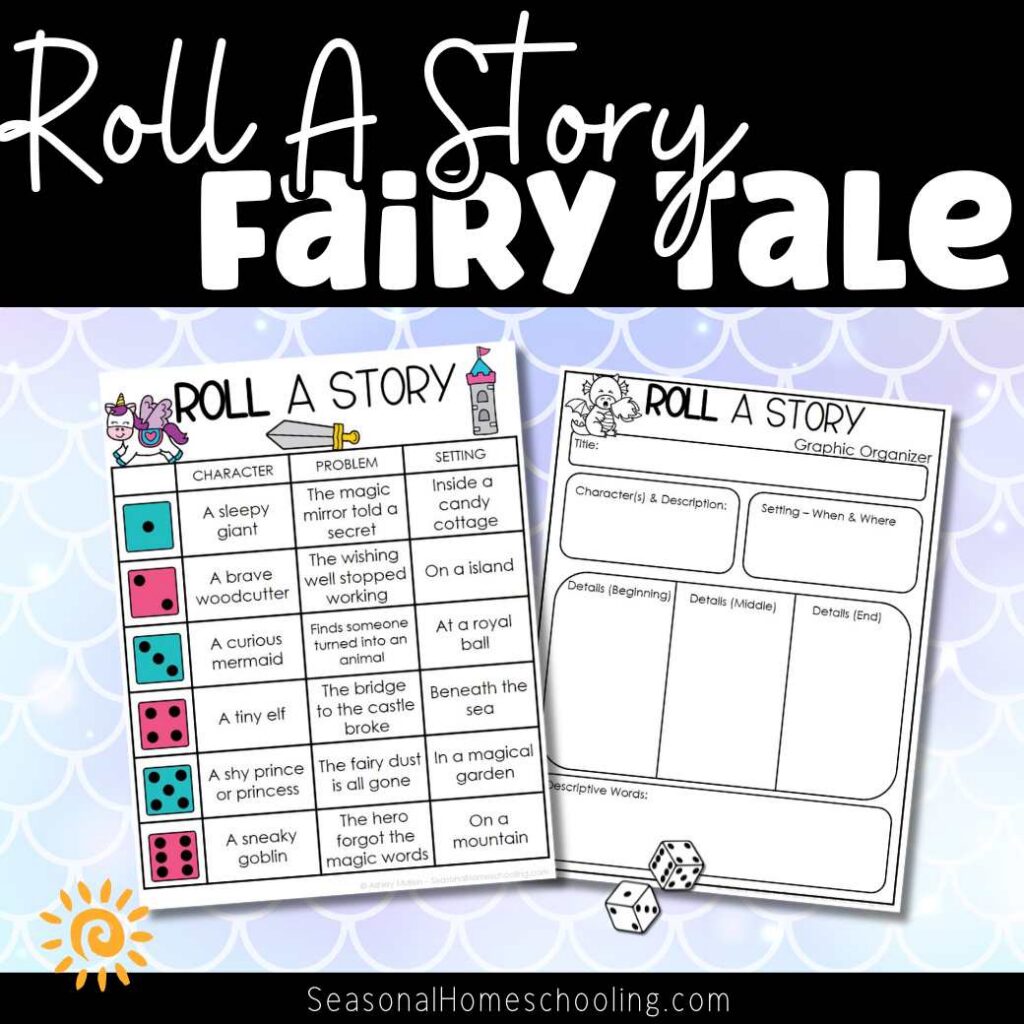
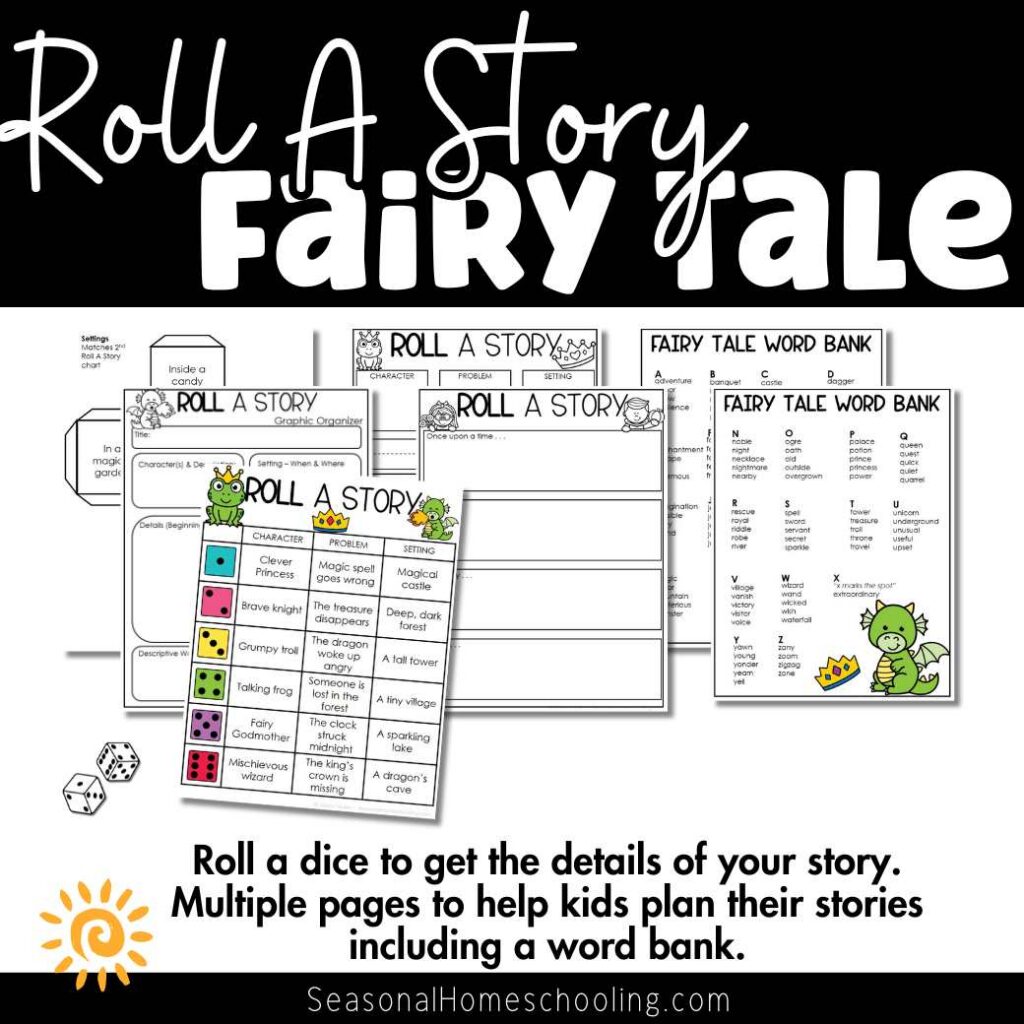
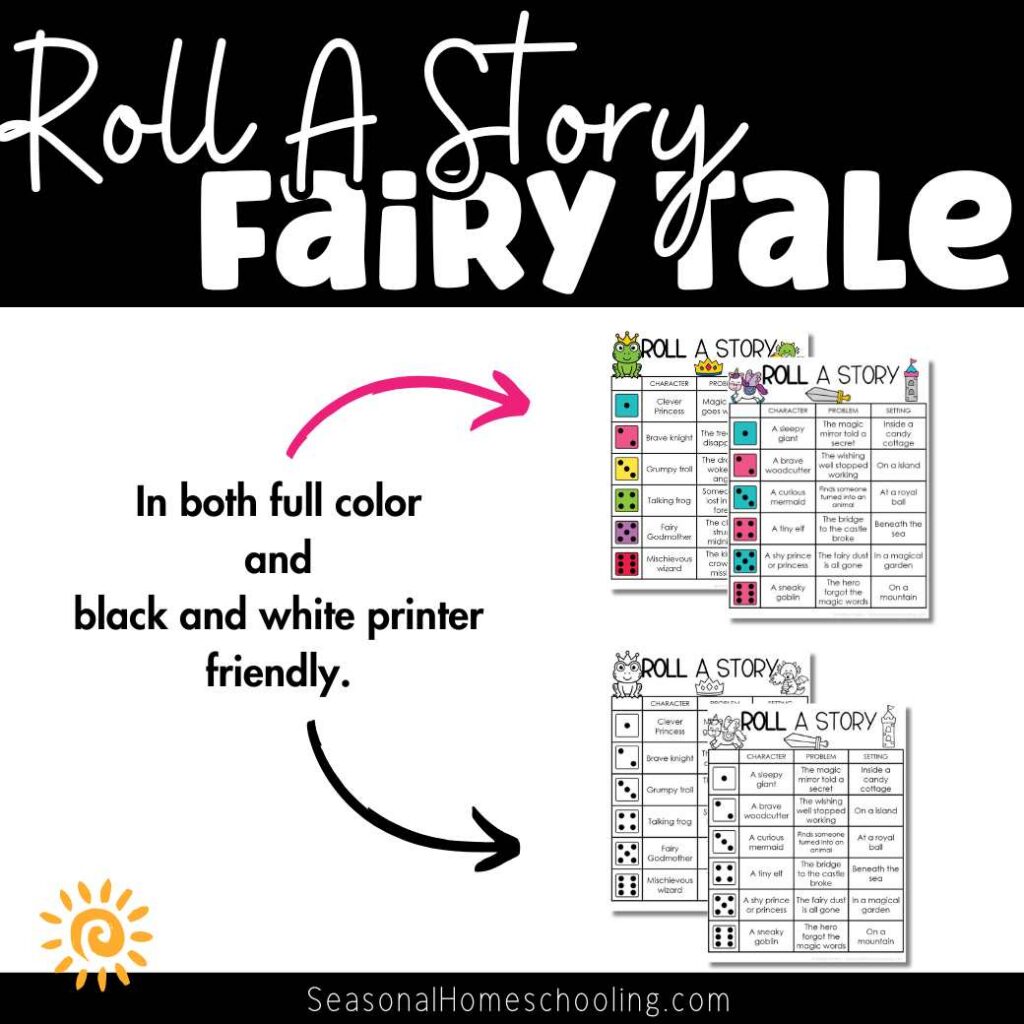
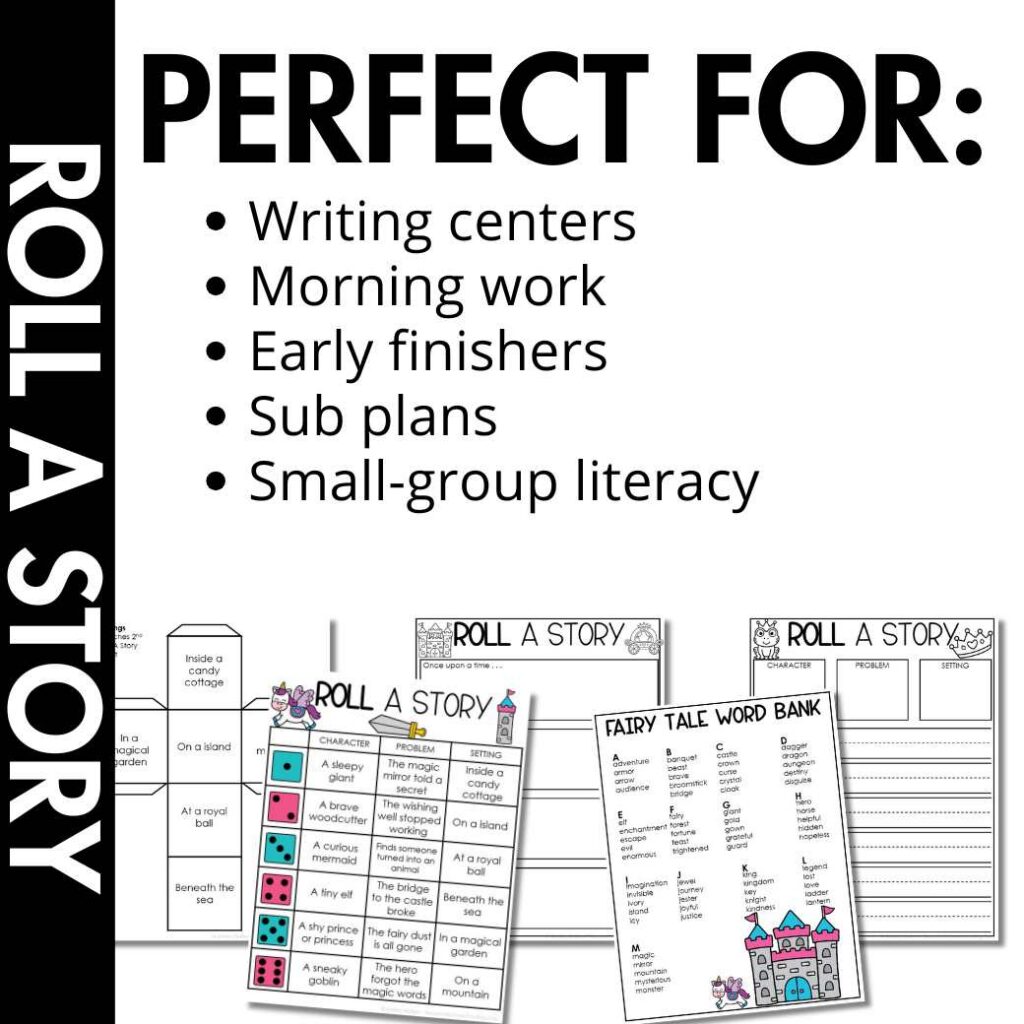
Fairy Tale Roll A Story | Story Elements Graphic Organizer Writing Center
Bring magic, imagination, and engaging literacy practice into your classroom with Fairy Tales Roll A Story, a creative writing activity for Grades 1–4. This fairy-tale themed resource gives students meaningful practice, review, and storytelling opportunities—perfect for writing centers, sub plans, early finishers, or fun narrative creative writing sessions.
How Roll a Story Activities Help Reluctant Writers
Roll a Story activities combine creativity, structure, and fun into one simple literacy activity.
Students roll a die to determine various story elements such as:
- Characters
- Settings
- Problems
- Story events
The random combinations create unique writing prompts every time.
This simple game-like format solves one of the biggest challenges reluctant writers face: coming up with ideas.
Instead of staring at a blank page, students immediately have the building blocks of a story.
For example, a student might roll:
- Character: A penguin
- Setting: A beach
- Problem: Lost treasure
Suddenly, they have a fun story waiting to be told. They will be giggling while they write a fun story.

Why Roll a Story Activities Work So Well
They Eliminate Writer’s Block
- One of the most frustrating parts of writing for many students is getting started.
- Roll a Story activities remove this barrier by providing instant inspiration.
- Students don’t need to spend time brainstorming because the activity does it for them.
They Feel Like a Game
- Dice add an element of excitement and unpredictability.
- Many reluctant writers are more willing to participate when an activity feels like a game rather than a formal assignment.
They Encourage Creativity
- The random combinations often create silly, surprising, and imaginative scenarios.
- Students may end up writing stories they never would have imagined on their own.
They Reduce Writing Anxiety
- Because the story elements are provided, students have fewer decisions to make.
- This extra support can help hesitant writers feel more confident and successful.
They Work for Multiple Ability Levels
- One of the best things about Roll a Story activities is their flexibility.
- Beginning writers can write a few simple sentences.
- More advanced writers can develop detailed stories with dialogue, descriptive language, and multiple paragraphs.

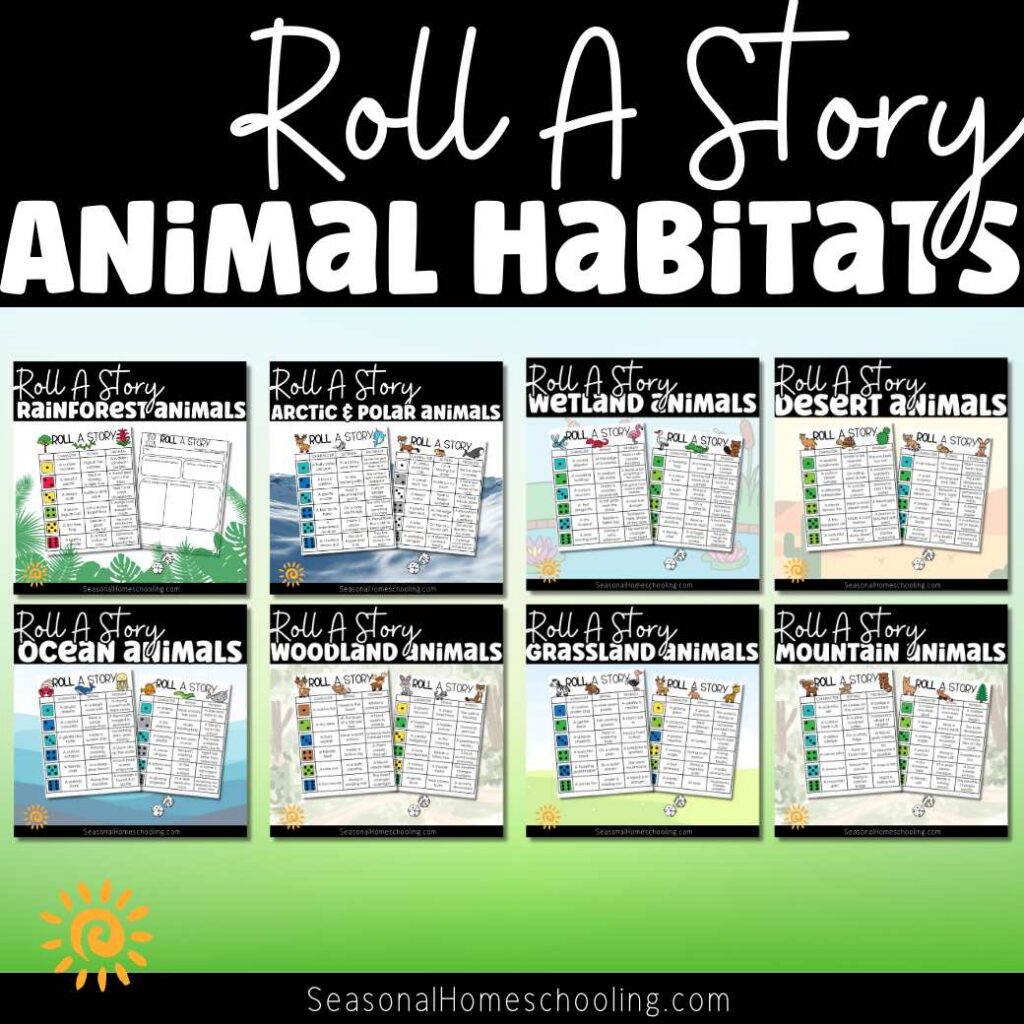
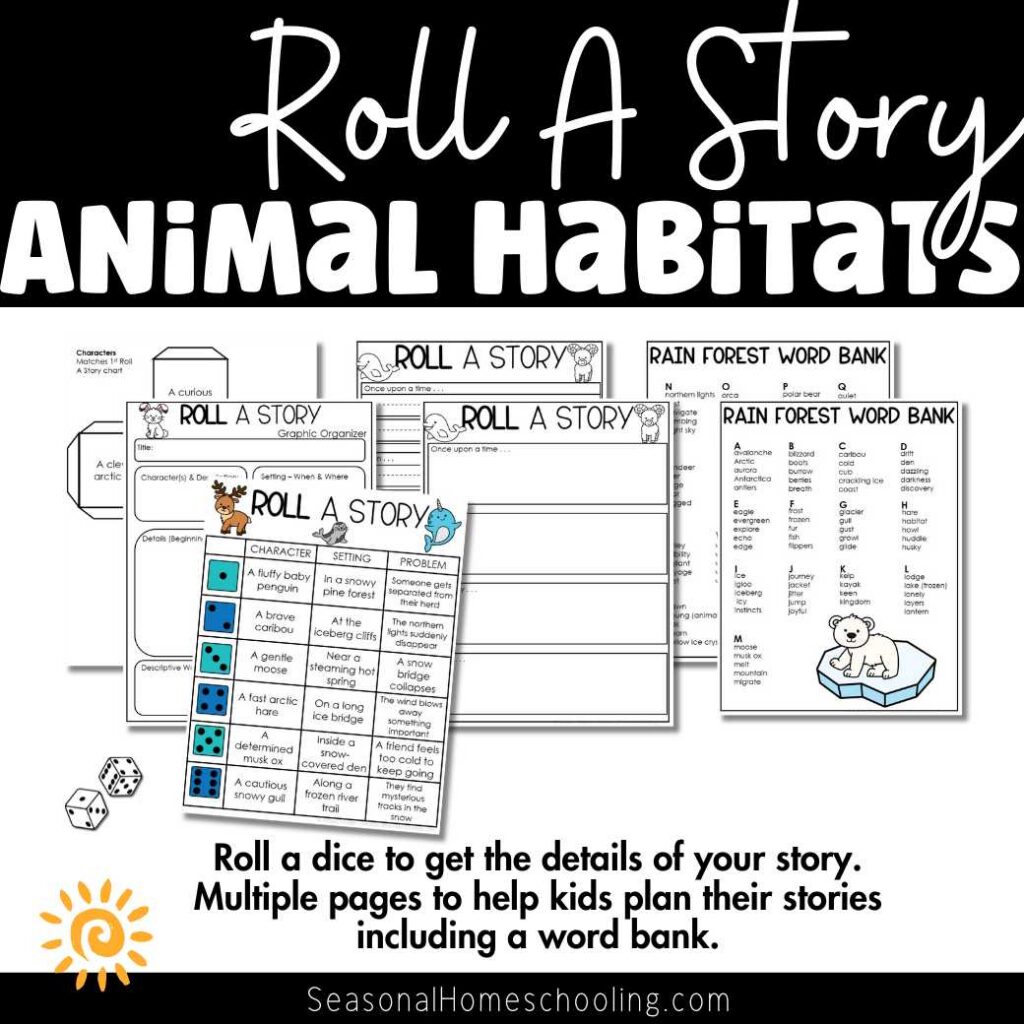
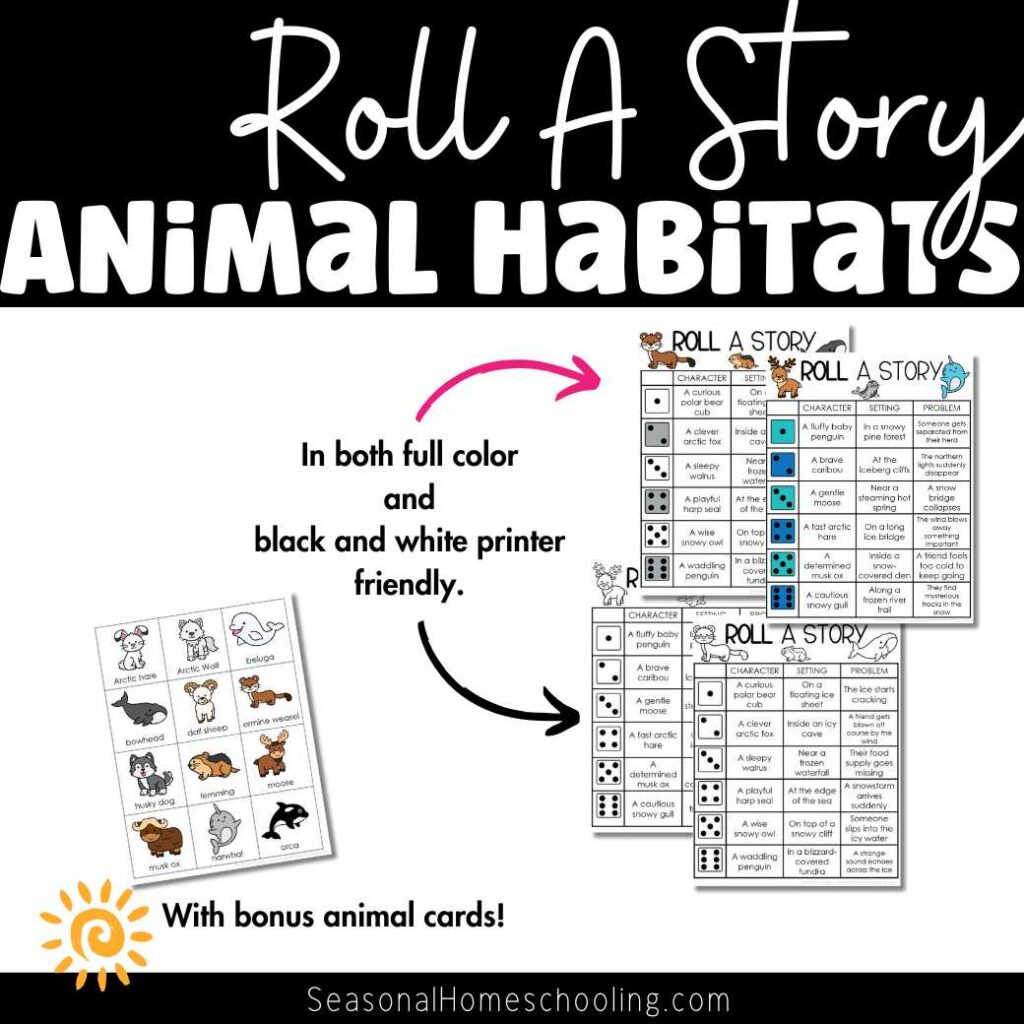
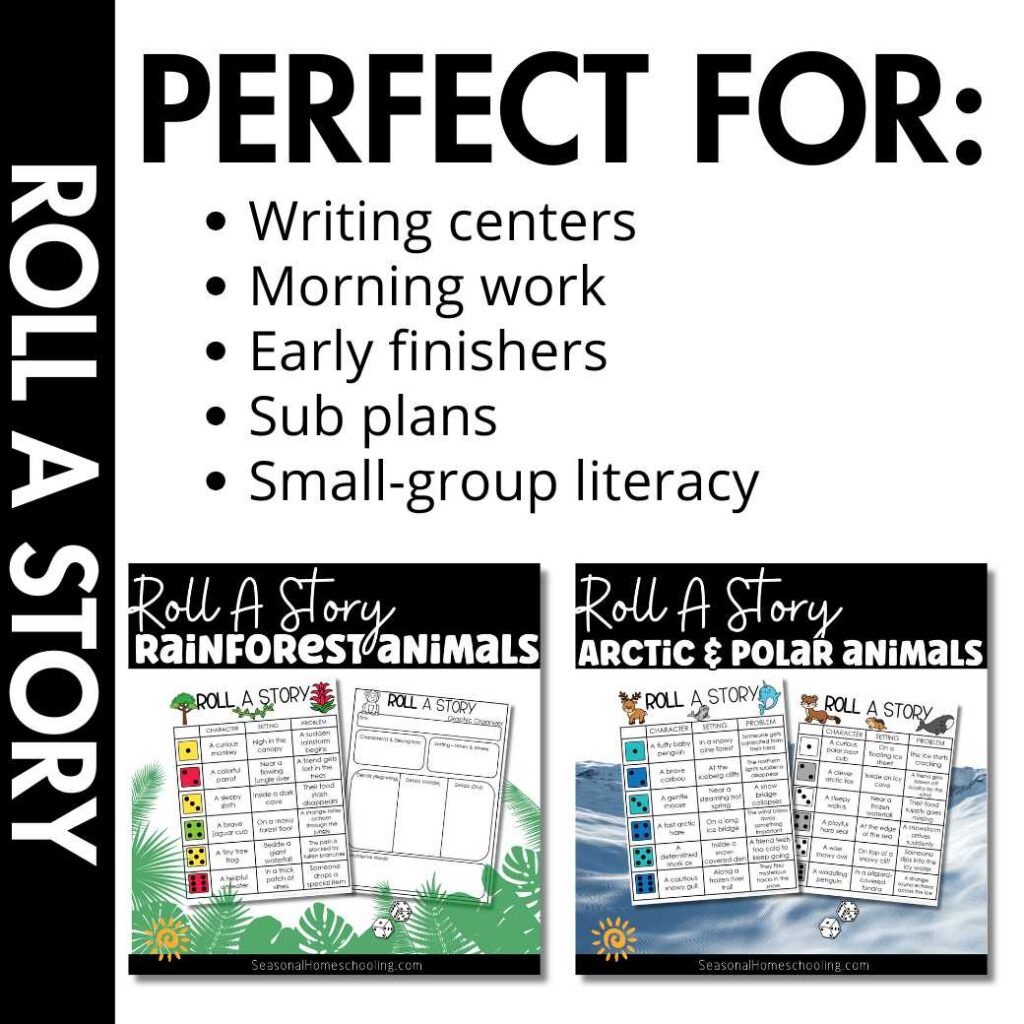
Animal Habitats Roll A Story | Creative Writing Activities Graphic Organizers
Introduce your Grades 1–4 students to creative storytelling across multiple environments with the Animal Habitats Roll A Story Growing Bundle, a collection of engaging roll a story writing activities that build strong story elements through fun, low-prep writing centers.
Ways to Use Roll a Story Activities with Reluctant Writers
Start with Oral Storytelling
- Not every story needs to be written immediately.
- Have students roll their story elements and tell the story aloud first.
- This allows them to organize their ideas verbally before putting them on paper.
Write Together
- For especially hesitant writers, try shared writing.
- Roll the story elements together and take turns contributing sentences.
- This collaborative approach reduces pressure while modeling the writing process.
Use Short Writing Sessions
Some reluctant writers become overwhelmed by lengthy assignments.
Instead of requiring a full-page story, start with:
- Three sentences
- A beginning, middle, and end
- One paragraph
- A comic strip version of the story
Small successes build confidence.
Add Illustrations
Many children enjoy drawing more than writing.
Allow students to illustrate their stories before or after writing.
Pictures can help them develop ideas and stay engaged throughout the activity.
Create Seasonal Writing Fun
Seasonal themes often increase motivation because they connect with topics children already enjoy.
Consider using themed Roll a Story activities throughout the year, such as:
The changing themes help keep writing fresh and exciting.
Encouraging Reluctant Writers Without Pressure
When helping reluctant writers, it’s important to focus on progress rather than perfection.
Try to:
- Celebrate creativity
- Praise effort
- Allow mistakes during drafting
- Keep writing sessions positive
- Offer plenty of encouragement
Remember that building confidence often comes before building writing skills.
A child who enjoys writing is far more likely to continue practicing and improving.
Roll a Story Activities Make Writing More Accessible
Many traditional writing prompts ask students to create an entire story from scratch. For reluctant writers, that can feel overwhelming.
Roll a Story activities provide just enough structure to support students while still leaving plenty of room for creativity.
By combining randomness, choice, and storytelling, these activities help transform writing into something enjoyable rather than intimidating.
If you’re looking for a simple way to engage reluctant writers, encourage creativity, and build writing confidence, Roll a Story activities can be a valuable addition to your literacy toolkit.
Sometimes all it takes is a roll of the dice to unlock a child’s imagination.
Want More?
Fun Back-to-School Writing Activities for Elementary Students
Low-Prep Writing Activities for January (That Kids Actually Enjoy)
How to Teach Writing in Early Elementary: A Guide for New Homeschool Parents