Nature Based Math: Using Natural Materials for Learning
Inside: Learn how to teach math outdoors with natural materials! Explore hands-on, nature-based math ideas perfect for homeschoolers and classrooms.
Math is a wonderful subject to take outdoors, and nature based math doesn’t have to be complicated. Using the natural world as a classroom opens the door to hands-on learning, exploration, and creativity. Nature-based math enhances problem-solving skills, supports critical thinking, and engages children’s attention spans in ways a traditional classroom setting sometimes can’t.
This post contains affiliate links, see my disclosure policy for more information.
Nature Based Math: Using Natural Materials for Learning
Whether you’re a homeschool parent or classroom teacher, there are endless opportunities to explore mathematical concepts in the great outdoors.
What is Nature-Based Math?
Nature-based mathematics is the use of natural materials and the natural environment to explore mathematical concepts. It includes using natural objects like pine cones, acorns, or rocks to teach place value, patterns, or even data collection. It might also involve observing mathematical concepts that occur in nature, such as symmetry, geometric shapes, or Fibonacci numbers in flower petals. Wild math embraces the idea that mathematical learning can—and should—happen outside, alongside seasonal changes and children’s interests.
This approach to math instruction can be adapted to any age group, from kindergarten math to middle school, and is a great way to make math fun and accessible for younger students and older learners alike.
Why Use Natural Materials to Teach Math?
Natural materials offer a tactile, engaging experience for young children and are often free and readily available. These materials invite free play, promote fine motor skills, and naturally support the development of number sense and other typical math skills. From abstract concepts like estimation and measurement to basic addition or concepts of geometry, using nature items makes learning more real-world and meaningful.
Math learning in the natural environment often includes physical activity, which improves focus and boosts mental health. The outdoor classroom is also a wonderful way to meet the needs of diverse learners and to incorporate math education into other subject areas, such as nature study or science.
Nature-Based Math Ideas
Here are some fun ways to incorporate nature-based math lessons into your day:
Collect and Count Natural Loose Parts
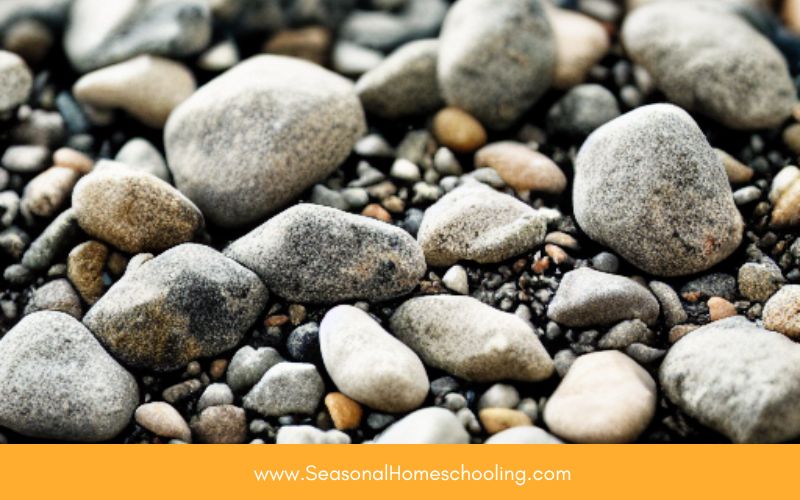
Use materials such as acorns, sticks, rocks, flower petals, or leaves. Children can sort by size, shape, or color, make tally marks to record quantities, or group them for skip counting, multiplication, or division. You can even bring a magnifying glass for closer inspection.
Explore Patterns in Nature
The natural world is full of patterns:
- Tree rings showing age
- Symmetry in leaves or flowers
- Spiral patterns in pine cones
Use these to start conversations about geometric shapes or repeating patterns. Let children create their own patterns using natural materials.
Nature Walks with Math Intentions
Take a nature walk with a purpose—look for different shapes, estimate distances, or collect data. For example, tally how many birds you hear or count types of flowers you see. Use your own backyard, a local park, or school outdoor play areas as your exploration zone.
Outdoor Measurement Activities
Measure sticks, rocks, or tree trunks using string or rulers. Compare lengths, calculate surface area, or use nature items to create a number line.
Create Real-World Projects
Math is everywhere in real life. Build a birdhouse or picnic table using measurement and geometry. Study the impact of extreme weather using data collection and simple equations. These projects help children apply math to meaningful, real-world problems.
Scavenger Hunts with Math Goals
Send kids on a math-focused scavenger hunt: “Find 5 items with different shapes,” or “collect 12 items and divide them into equal groups.” Incorporate concepts like sorting, counting, and estimation skills.
Math Games and Activity Sheets Outside
Bring clipboards and play math games or complete simple activity sheets outside. Practice math facts, number line jumps, or place value using natural objects as math tools.
Math and Seasonal Changes
Shaping up summer or observing the patterns of dark winter evenings can guide math activities around seasons of the year. Track the temperature daily or record rainfall to integrate graphing and data collection.
How Nature-Based Math Supports Learning
Nature connections make learning stick. When children experience math through physical activity and outdoor exploration, they retain concepts better. Nature-based math is a fabulous way to:
- Encourage mathematical thinking
- Support children’s learning styles
- Strengthen fine motor skills
- Connect math to real-world applications
- Enhance critical thinking
It also allows you to align math instruction with children’s interests and attention spans, creating a more joyful learning experience.
Tools for Success
Here are a few math tools that work great for outdoor math activities:
- Clipboards and pencils
- Buckets or baskets for collecting items
- Measuring tapes or rulers
- Magnifying glasses
- Nature notebooks
- Outdoor-friendly activity sheets
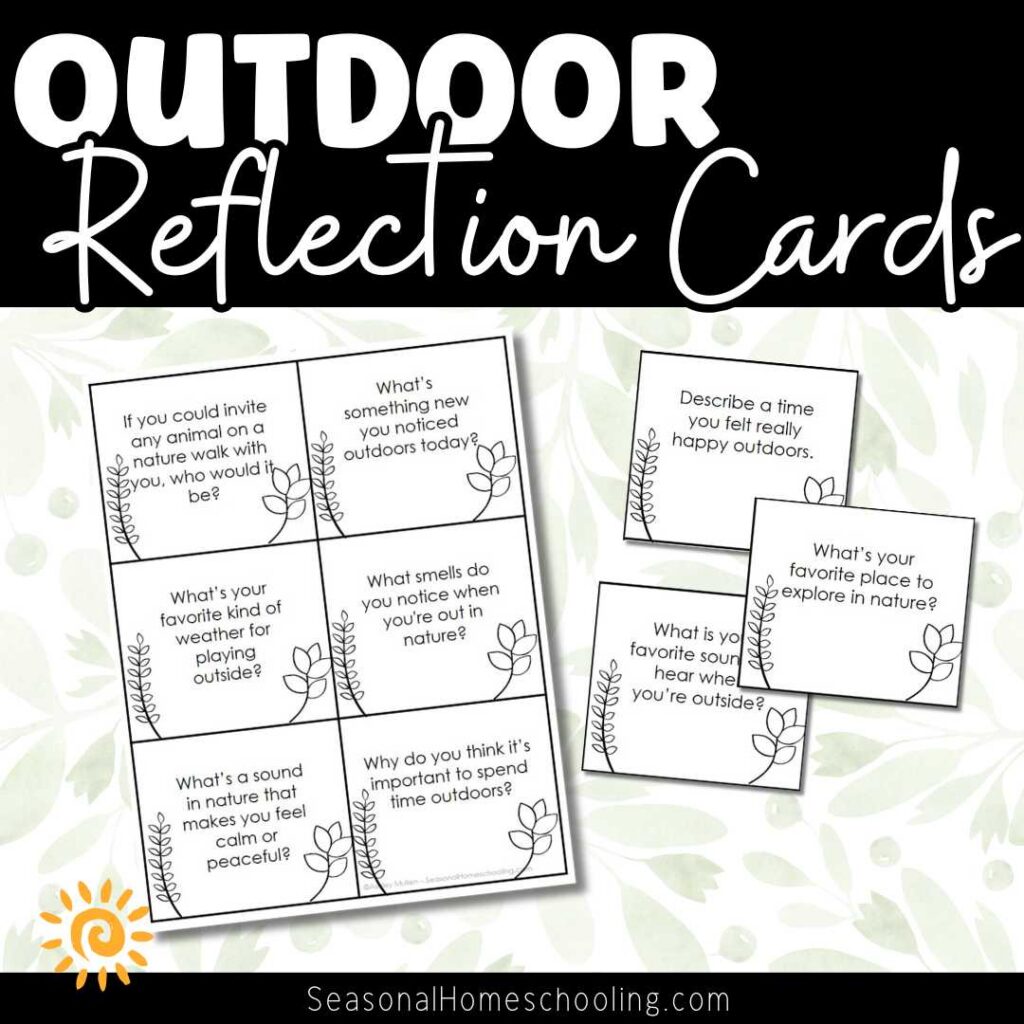
Outdoor Reflection Cards | Nature Writing Prompts & Conversation Starters (Grades 2-5)
Looking to get your students thinking, talking, and writing while soaking in the beauty of the outdoors? These Outdoor Reflection Cards are the perfect companion for springtime learning! Designed for grades 2–5, this set of 30 printable cards encourages meaningful conversations, reflective writing, and a deeper connection with nature.
Bring It All Together
Whether you’re using a stick as a fabulous stick to draw shapes in the dirt or arranging leaves into geometric designs, nature-based math opens the door to deeper understanding and enthusiasm for math. Don’t forget to incorporate a list of math picture books or a curriculum guide to keep your lessons structured and inspired.
Nature math is more than just counting rocks—it’s about sparking curiosity, promoting real-world learning, and making math fun. So head outside, gather some natural shapes, and see where the numbers take you.
Want to Go Deeper?
Be sure to check out my list of my favorite math books and explore more nature-based math lessons tailored for your homeschool or classroom setting. Whether at the kitchen table or under a tree, math learning can happen anywhere!
More Nature Based for Your Homeschool
Reasons for Exploring Nature with Children